Broken Teeth Crowns: Causes, Treatment Options, and How to Protect Your Smile
Broken teeth crowns can be frustrating, uncomfortable, and sometimes alarming. Dental crowns are designed to restore and protect damaged teeth, but like any dental restoration, they are not indestructible.
Over time, a crown may crack, chip, loosen, or even fall off completely. Understanding why broken teeth crowns occur and knowing what to do next can help prevent further damage and reduce the risk of expensive dental treatment.
If you have noticed a damaged crown or are experiencing pain around a crowned tooth, seeking professional advice as soon as possible is important. Early treatment often helps preserve the underlying tooth and avoid more complex procedures later.
Patients concerned about broken teeth crowns can arrange a free panoramic X-ray and consultation through Hungarian Dentists Wexford. Contact Fintan (0873490104) for more information.
All professional dental treatments take place in Perfect Smile Dental Clinic in Hungary, with follow-up aftercare provided in Hungarian Dentists Wexford Town Clinic.
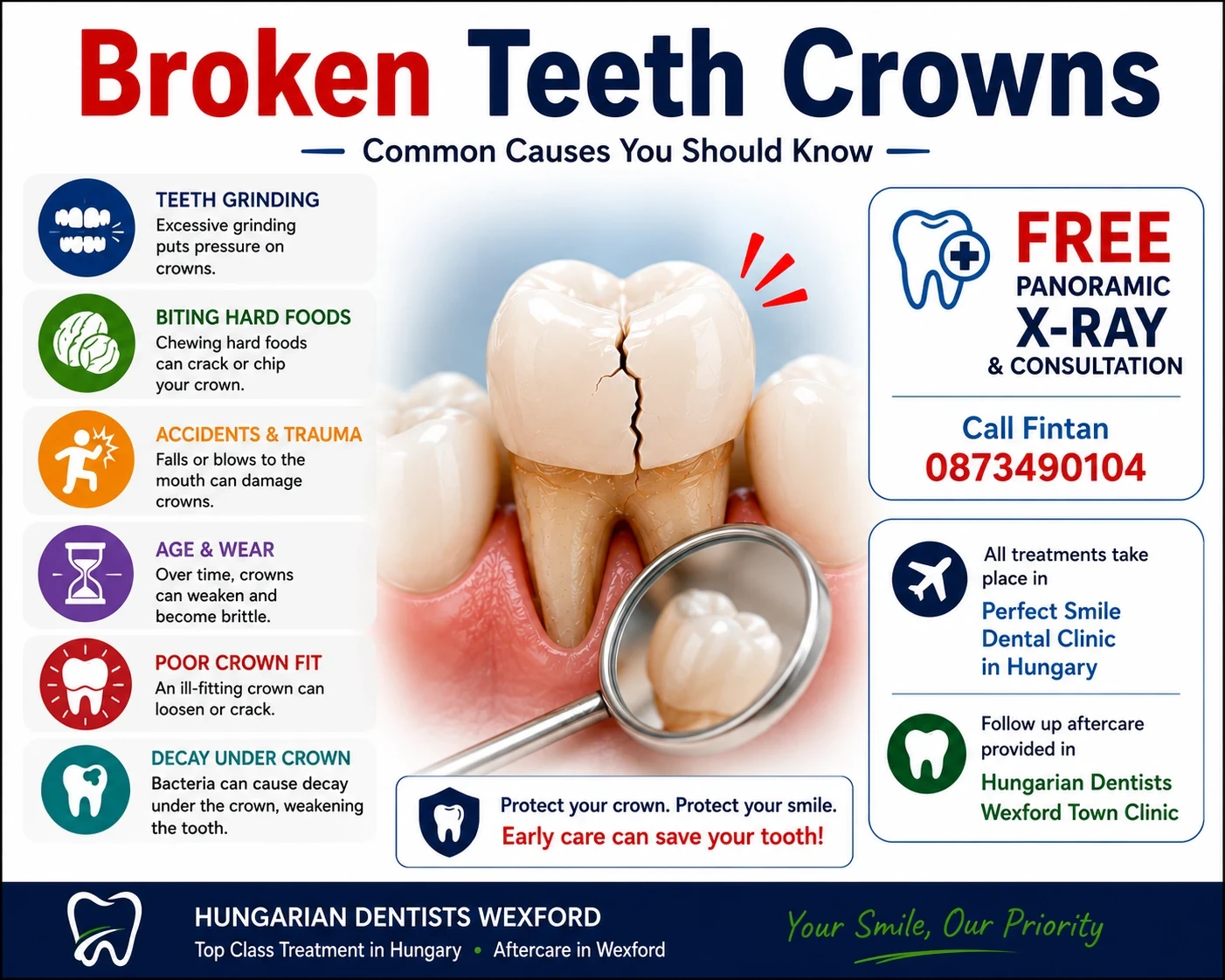
What Is a Dental Crown?
A dental crown is a custom-made cap that fits over a damaged, weakened, or heavily restored tooth. Crowns are commonly used to strengthen teeth after root canal treatment, repair large fillings, restore broken teeth, or improve appearance.
Modern crowns may be made from porcelain, ceramic, zirconia, metal alloys, or a combination of materials. While these restorations are designed to last for many years, they can still become damaged under certain circumstances.
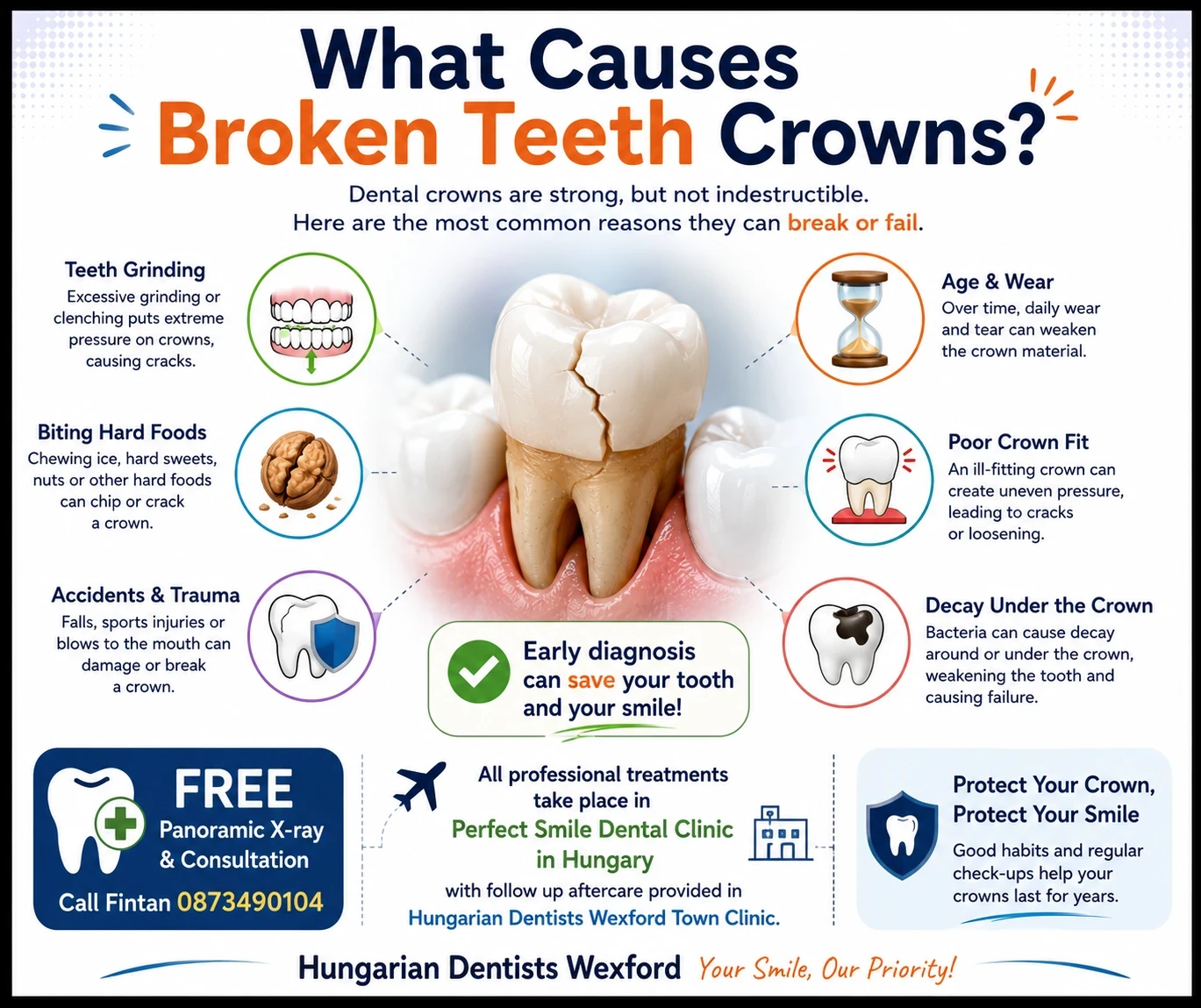
What Causes Broken Teeth Crowns?
Teeth Grinding and Clenching
One of the most common causes of broken teeth crowns is excessive grinding or clenching, often known as bruxism. Constant pressure places significant stress on both natural teeth and crowns.
Many people grind their teeth while sleeping and may be unaware of the habit until dental damage occurs. Over time, repeated force can create cracks or fractures in the crown material.
Biting Hard Foods
Chewing ice, hard sweets, nuts, or other tough foods can place excessive pressure on crowns. Even strong modern materials can crack when exposed to sudden, concentrated force.
Accidents and Trauma
Sports injuries, falls, vehicle accidents, or direct blows to the mouth can cause broken teeth crowns. In some cases, both the crown and the underlying tooth may be damaged.
Age and Wear
Dental crowns experience daily wear from chewing, speaking, and normal oral function. After many years, the materials may weaken or develop small fractures.
Poor Crown Fit
If a crown was not fitted correctly, uneven pressure may develop during chewing. This can create stress points that increase the likelihood of fractures or loosening over time.
Decay Under the Crown
Although the crown itself cannot decay, the tooth underneath remains vulnerable. Bacteria can enter around the crown margins if oral hygiene is inadequate.
Decay beneath a crown may weaken the supporting tooth structure, causing the restoration to become unstable or break.
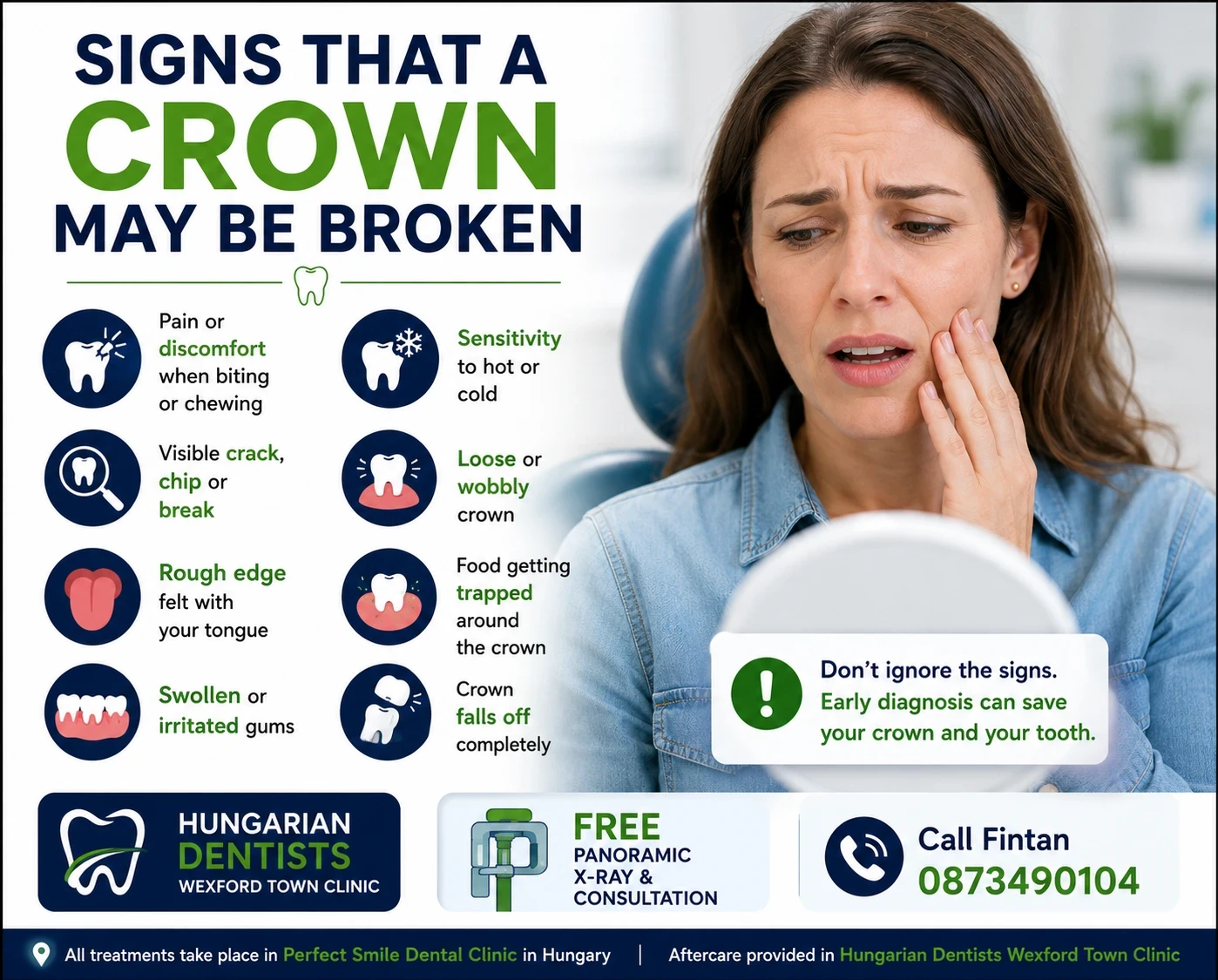
Signs That a Crown May Be Broken
- Pain when biting or chewing
- Sensitivity to hot or cold foods
- A rough edge felt with the tongue
- Visible crack or chip
- Loose crown movement
- Food becoming trapped around the crown
- Swelling or discomfort in surrounding gums
- The crown falling out completely
Even minor symptoms should not be ignored. Small cracks can worsen quickly if left untreated.
What Should You Do If You Have a Broken Crown?
If you suspect broken teeth crowns, taking the right steps can help protect your tooth until you receive professional treatment.
- Contact your dentist as soon as possible.
- Save the crown if it has fallen out.
- Avoid hard foods and chew on the opposite side.
- Maintain good oral hygiene.
- Avoid extremely hot or cold foods if the area is sensitive.

Can a Broken Crown Be Repaired?
The answer depends on the extent of the damage. Small chips in porcelain crowns can sometimes be repaired using dental bonding materials. However, larger fractures often require replacement of the crown.
Your dentist will examine both the crown and the underlying tooth before recommending the most suitable solution.
Treatment Options for Broken Teeth Crowns
The most suitable treatment depends on the condition of both the crown and the tooth underneath. Some patients may only require a repair or replacement crown, while others may need more advanced restorative treatment.
You can learn more about dental crowns options in Hungary and the different materials available for restoring damaged teeth.
Many patients begin with a free panoramic X-ray and consultation at Hungarian Dentists Wexford Town Clinic. Contact Fintan (0873490104) to discuss your treatment options.
All professional treatments are carried out in Perfect Smile Dental Clinic in Hungary, while follow-up aftercare is provided locally through Hungarian Dentists Wexford Town Clinic.
When Does a Crown Need Replacement?
- The crown is severely cracked.
- The crown no longer fits properly.
- The supporting tooth has decay.
- The crown repeatedly becomes loose.
- The restoration has reached the end of its lifespan.
Modern crown materials can provide excellent strength, aesthetics, and durability when properly maintained.
What Happens If the Tooth Under the Crown Is Damaged?
Sometimes the problem extends beyond the crown itself. The underlying tooth may develop decay, fractures, or infection.
Treatment options may include replacing the crown, removing decay, root canal treatment, rebuilding the tooth structure, or in severe cases replacing the tooth with a dental implant.
How Long Do Dental Crowns Last?
Many crowns last between 10 and 15 years, although some function successfully for considerably longer.
Factors influencing longevity include oral hygiene habits, grinding and clenching, dietary habits, crown material, and regular dental maintenance.
How to Reduce the Risk of Broken Teeth Crowns
- Wear a night guard if you grind your teeth.
- Avoid chewing hard objects such as ice and hard sweets.
- Maintain good oral hygiene.
- Attend regular dental examinations.
- Wear a mouthguard during contact sports.
Why Prompt Treatment Matters
Ignoring broken teeth crowns can lead to further complications. Cracks may worsen, bacteria may enter the underlying tooth, and additional restorative treatment may become necessary.
Many patients choose to start with a free panoramic X-ray and consultation at Hungarian Dentists Wexford Town Clinic. Contact Fintan (0873490104) to arrange an appointment. All professional dental treatments are completed in Perfect Smile Dental Clinic in Hungary, with ongoing follow-up aftercare available in Hungarian Dentists Wexford Town Clinic.
Final Thoughts on Broken Teeth Crowns
Broken teeth crowns are a relatively common dental issue that can occur due to grinding, trauma, ageing, decay, or everyday wear and tear.
While crowns are designed to be strong and long-lasting, they still require proper care and maintenance.
If you notice signs of a cracked, chipped, loose, or damaged crown, arranging a dental assessment promptly can help protect your oral health and preserve the underlying tooth. Patients considering treatment can explore dental crown treatment options and begin with a free consultation in Wexford.
Research Study
Clinical Performance of Tooth-Supported Monolithic Zirconia Crowns
thanks a lot of information greatfull