Hungarian Dentists Wexford | Patient Guide 2026
Dental Implants Consultation Process: From Wexford to Hungary
Thinking about dental implants but unsure where to begin? You do not have to travel to Hungary just to ask your first questions.
At Hungarian Dentists Wexford, patients can arrange a free initial consultation and panoramic X-ray in Wexford town before considering treatment at Perfect Smile Dental Implant Center in Hódmezővásárhely, Hungary.
This guide explains the dental implants consultation process, what the dentists assess, how treatment is planned, and what happens when you return to Ireland for aftercare.

What Is the Dental Implants Consultation Process?
The dental implants consultation process is the assessment that takes place before a dentist recommends implant treatment.
Dental implants are artificial tooth roots placed in the jawbone to support replacement teeth, such as crowns, bridges, or implant-supported dentures.
However, not everyone is suitable for the same treatment. The dentist needs to examine the health of your gums, remaining teeth, jawbone, and surrounding structures before recommending a particular approach.
The assessment is important whether you need a single implant, several implants, or a full-mouth restoration.
For patients considering treatment abroad, it also provides an opportunity to understand the practical arrangements before making travel commitments.
Step 1: Free Dental Implant Consultation in Wexford
The first step for many patients is a visit to Hungarian Dentists Wexford.
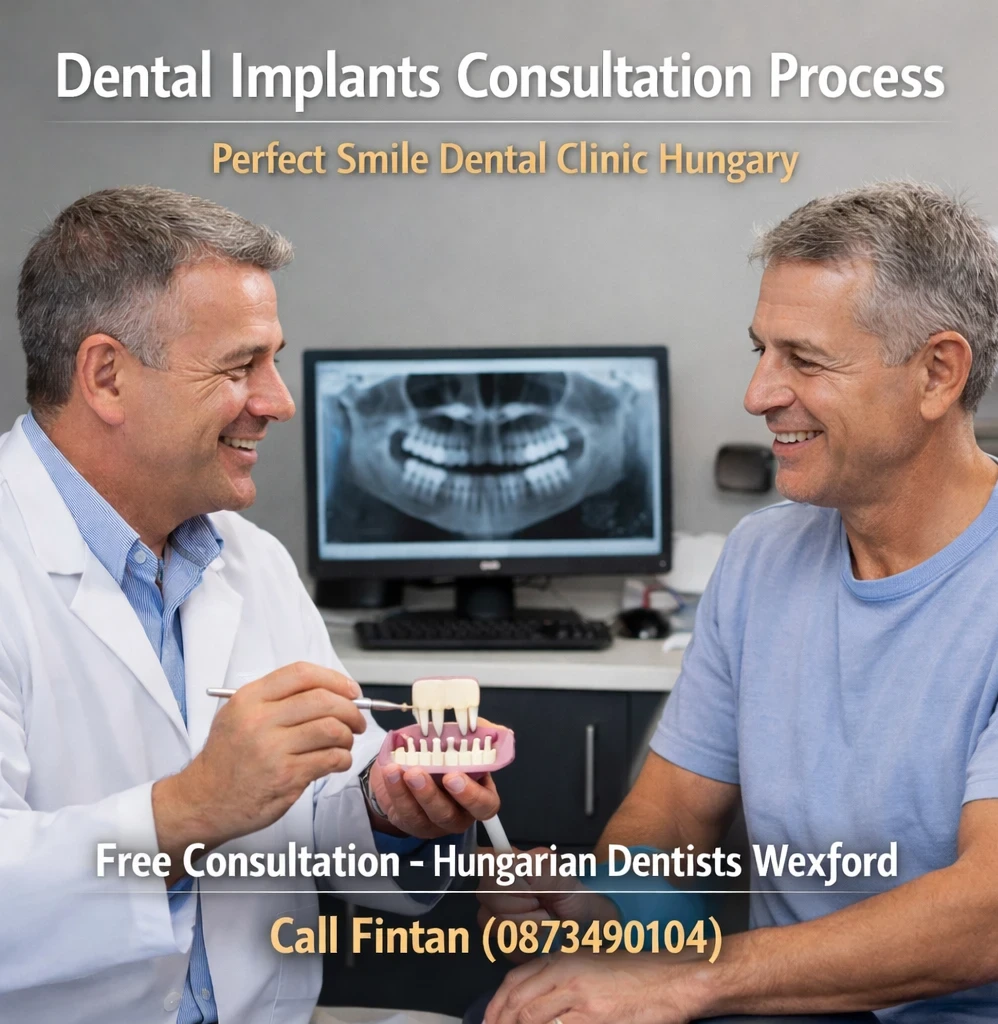
The Wexford clinic offers a free initial consultation and panoramic X-ray, allowing patients to discuss their dental concerns without first travelling to Hungary.
During the appointment, the dental team can review your circumstances and explain which treatment possibilities may be worth investigating further.
What should you discuss?
- Which teeth are missing, damaged, or causing difficulties.
- Whether you currently wear dentures or have existing bridges.
- Problems with chewing, speaking, or the appearance of your smile.
- Your previous dental treatment and relevant medical history.
- Whether you are considering single implants or a more extensive restoration.
- Your questions about treatment in Hungary, costs, and follow-up care.
The initial visit helps establish the next steps. A final implant treatment plan may require further assessment and imaging by the treating dentists.
To arrange your free appointment, call Fintan on 087 349 0104.
Step 2: Dental X-Rays and Further Imaging
Dental imaging is an important part of planning implant treatment.
A panoramic X-ray provides an overview of the teeth and jaws. It can help the dental team identify missing teeth, assess general bone levels, and look for issues requiring closer investigation.
For some patients, further imaging such as a 3D cone beam CT (CBCT) scan may be recommended.
A CBCT scan can provide additional information about the available jawbone and the position of nearby anatomical structures, including nerves and sinuses.
Not every patient needs the same investigations. The treating dentist determines which scans are appropriate and explains their purpose.
Imaging may also help identify whether procedures such as bone grafting or a sinus lift need to be considered before implant placement.
Step 3: Your Personalised Dental Implant Treatment Plan
Once the relevant examinations and diagnostic information have been reviewed, the dental team can discuss treatment options based on your individual needs.
Your proposed treatment plan should explain:
- The recommended type and number of implants.
- How the replacement teeth will be supported.
- Whether existing teeth need treatment or extraction.
- Any additional procedures that may be necessary.
- The expected stages of treatment and healing.
- Potential risks, limitations, and alternative treatments.
- The estimated treatment costs and what is included.
Single implants or full-mouth treatment?
A patient replacing one missing tooth may require a very different plan from someone considering All-on-4, All-on-6, or another full-arch restoration.
The number of implants and the type of final restoration depend on clinical findings. The dentist should explain the available options rather than assuming that one solution is suitable for everyone.
For further information about full-arch pricing, read our full-mouth dental implants cost guide.
Understanding the costs
Ask for a written estimate showing the proposed procedures, materials, and any additional costs that may apply.
Travel, accommodation, further scans, extractions, grafting, and other procedures may affect the overall budget. The final price depends on your individual treatment plan.
Step 4: Medical History and Implant Suitability
Before dental implant surgery, your dentist needs to understand your general health as well as your oral health.
Conditions such as diabetes, a history of gum disease, and certain bone-related or cardiovascular conditions may influence treatment planning.
Your dentist will also need to know about prescribed medication, previous surgery, smoking, and any relevant medical treatment.
For example, some medicines affecting bone metabolism or blood clotting may require additional consideration. Do not stop or change prescribed medication without advice from the appropriate healthcare professional.
Smoking can increase the risk of implant complications and may affect healing.
In some cases, treating gum disease or other dental problems may be recommended before implant surgery.
Step 5: Planning Dental Implant Treatment in Hungary
If you decide to proceed following the appropriate assessment and treatment discussions, the next stage involves arranging care at Perfect Smile Dental Implant Center in Hódmezővásárhely, Hungary.
Patients can discuss proposed appointment dates, travel arrangements, the expected length of stay, and whether more than one trip may be required.
Some implant treatments involve a healing period before the final crown, bridge, or denture is fitted. More complex cases may require additional stages.
The timetable depends on the treatment being performed and how the individual patient heals.
Fintan can help patients understand the arrangements and who to contact with questions before travelling.
What Happens After Treatment? Aftercare in Wexford
One of the important considerations when arranging dental treatment abroad is what happens after you return home.
Hungarian Dentists Wexford provides local follow-up arrangements for patients treated at Perfect Smile Dental Implant Center in Hungary.
Members of the dental team from Hungary visit the Wexford clinic approximately every four weeks, allowing planned check-ups and suitable follow-up care to take place locally.
Not every concern can necessarily be resolved during a local appointment. Depending on the circumstances, further assessment or treatment in Hungary may sometimes be required.
Patients should follow their individual aftercare instructions and seek prompt professional advice if they experience increasing swelling, persistent bleeding, fever, severe pain, or other concerning symptoms.
It is worth discussing the aftercare arrangements during your consultation, including whom to contact between scheduled clinic visits.
Questions to Ask During Your Dental Implant Consultation
Arriving with a few prepared questions can make your appointment more useful.
- Am I a suitable candidate for dental implants?
- Are there alternatives to implants for my situation?
- Will I need additional X-rays or a CBCT scan?
- Is there enough bone to support the proposed implants?
- What type of replacement teeth would you recommend?
- How many visits to Hungary might be necessary?
- What is included in the treatment estimate?
- What complications should I be aware of?
- What follow-up care will be available in Wexford?
- Who should I contact if I have a problem after returning home?
There is no need to make a decision immediately. You should have time to understand the options, costs, and potential risks before agreeing to treatment.
Dental Implants Consultation Process: Frequently Asked Questions
Is the dental implant consultation free in Wexford?
Yes. Hungarian Dentists Wexford offers a free initial consultation and panoramic X-ray for patients considering treatment through Perfect Smile Dental Implant Center in Hungary. Ask about any additional investigations or treatment costs before proceeding.
Do I have to travel to Hungary for my first consultation?
No. You can begin by arranging a consultation in Wexford. Further assessment in Hungary may be required before a final treatment plan is confirmed.
Does everyone need a 3D CBCT scan?
No. The need for CBCT imaging depends on the clinical circumstances and whether conventional examination and X-rays provide sufficient information for treatment planning.
How long does the dental implant process take?
It varies. Some treatments require several stages and a period of healing before the final replacement teeth can be fitted. Your dentist should explain the expected timeline for your particular case.
Can patients from Northern Ireland attend the Wexford clinic?
Yes. Patients from Northern Ireland can enquire about arranging an initial consultation in Wexford and discussing the treatment and follow-up arrangements.
Will I have aftercare in Ireland?
Follow-up care is coordinated through Hungarian Dentists Wexford, with visiting members of the Perfect Smile dental team approximately every four weeks. The appropriate arrangements depend on your treatment and any concerns that arise.
Book Your Free Dental Implant Consultation in Wexford
Considering dental implants but not sure where to start?
Speak with Fintan at Hungarian Dentists Wexford about your options, the free initial consultation and panoramic X-ray, treatment at Perfect Smile Dental Implant Center in Hungary, and follow-up care in Wexford.
Call Fintan: 087 349 0104You can also visit our contact page for further information.

Further Reading and Medical References
- Association of Dental Implantology: Before Surgery
- Guy’s and St Thomas’ NHS: Dental Implants
- Perfect Smile Dental Clinic Hungary
Medical information in this guide is provided for general education. Individual treatment recommendations must come from a qualified dental professional following an appropriate clinical assessment.