Updated September 2026 | Hungarian Dentists Wexford
If your dental crown suddenly feels loose — or has actually come off — you are probably wondering why do crowns fall out and whether the crown can simply be put back on?
A properly fitted dental crown should normally remain securely attached to the tooth. However, crowns are not indestructible and they do not last forever.
A crown can become loose because of problems with the crown itself, the cement holding it in place or, importantly, changes to the natural tooth underneath it.
Quick answer:
Common reasons dental crowns fall out include decay underneath the crown, loss of dental cement, damage to the supporting tooth, an unsuitable fit, heavy biting forces, teeth grinding and trauma.
If your crown falls out, keep the crown somewhere safe and arrange a dental assessment. Do not permanently glue it back yourself.
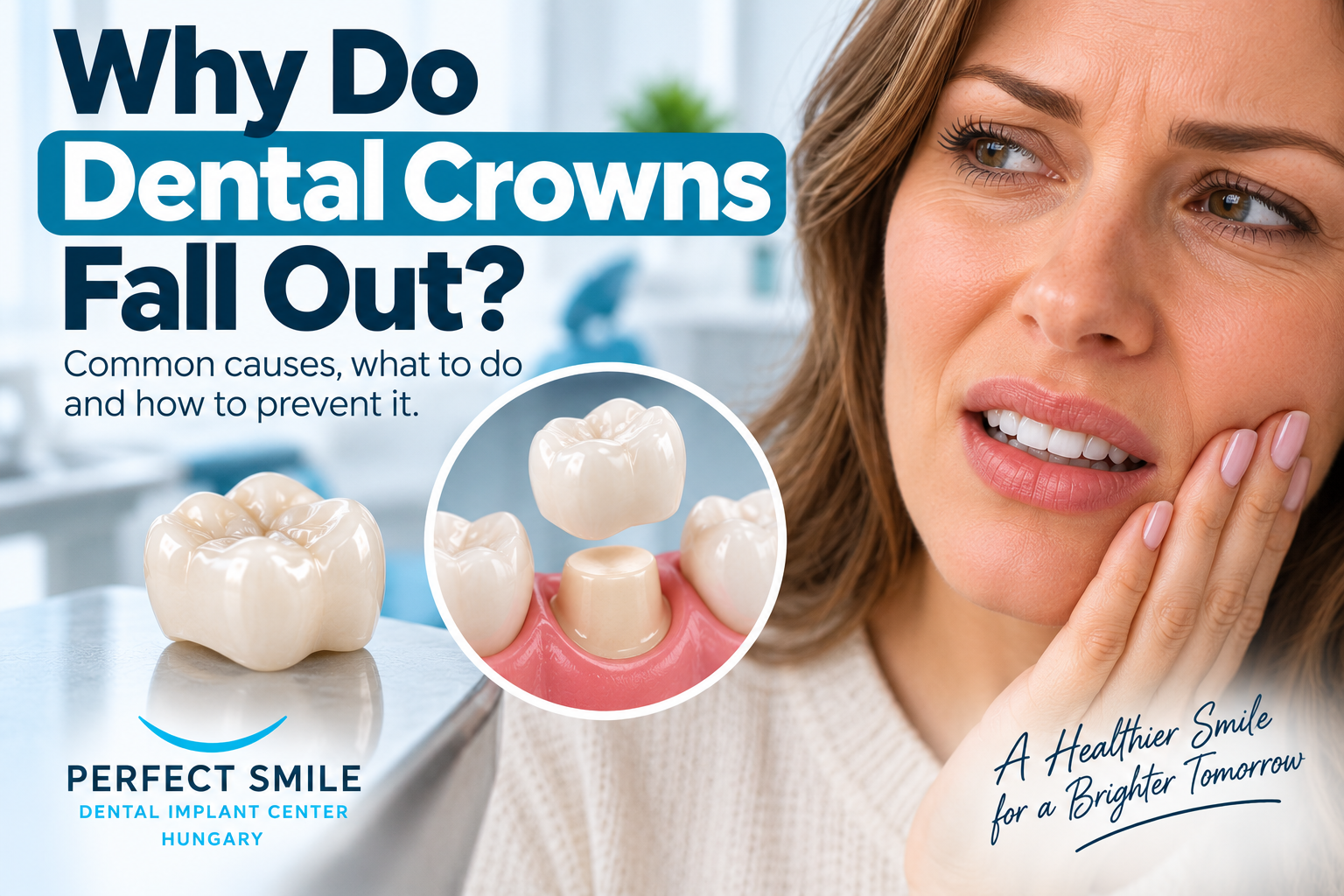
Why Do Dental Crowns Fall Out?
There isn’t one single reason.
Sometimes a crown loosens because the cement bond has failed while the underlying tooth remains healthy. In other cases, the crown coming off is a sign that the tooth underneath has changed or become damaged.
The dentist needs to examine both the crown and the remaining tooth before deciding whether the crown can be recemented or whether further treatment is required.
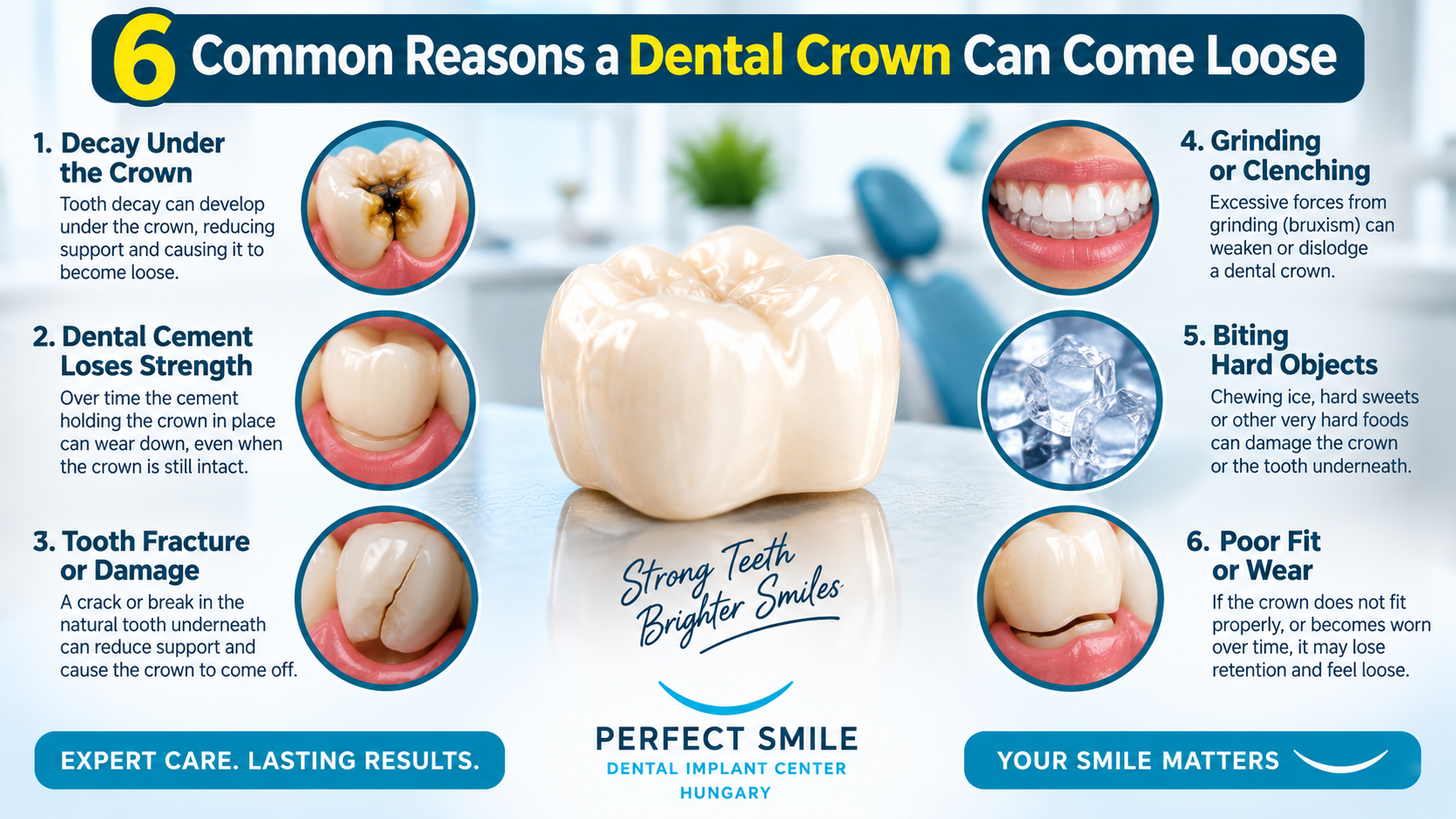
1. Decay Under the Crown
The crown itself cannot develop tooth decay, but the natural tooth underneath it can.
Decay frequently begins near the margin where the crown meets the tooth. As natural tooth structure is lost, the crown may no longer have sufficient support and can become loose.
2. Dental Cement Loses Retention
Dental crowns are secured using dental cement or another appropriate bonding system.
Over time, retention can sometimes be lost even when the crown itself has not broken.
If the crown and underlying tooth remain suitable, a dentist may sometimes be able to clean and recement the crown.
3. The Tooth Underneath Breaks
A heavily restored or weakened natural tooth can fracture underneath a crown.
If that happens, there may no longer be enough healthy tooth structure to support the existing crown.
The dentist then needs to determine whether the tooth can be rebuilt or whether another treatment is necessary.
4. Teeth Grinding or Clenching
Grinding or clenching the teeth — known as bruxism — can place considerable repetitive force on crowns and natural teeth.
Over time these forces can contribute to wear, chipping, fracture or loss of retention.
5. Biting Something Very Hard
Ice, hard sweets, popcorn kernels and other very hard objects can place excessive force on a crown.
A sudden force may damage the crown, the cement or the supporting tooth.
6. Trauma
A blow to the mouth during a fall, accident or sport can dislodge a crown or damage the tooth underneath it.
Dental trauma should be assessed even when the crown initially appears intact.
7. Insufficient Tooth Structure
A crown needs an adequate foundation.
If very little healthy tooth remains, achieving reliable retention can be more difficult. Sometimes a core build-up or other restorative treatment is required before the crown is fitted.
8. Problems With Fit or Design
The preparation of the tooth, shape of the crown and accuracy of fit all contribute to retention.
If a crown repeatedly comes loose, simply cementing it back on again may not address the underlying cause.
What Should I Do If My Dental Crown Falls Out?
If the Crown Has Come Completely Off
- Keep the crown. Do not throw it away because the dentist may want to inspect it and it may sometimes be reusable.
- Arrange a dental appointment. The tooth needs to be examined to determine why the crown came off.
- Keep the area reasonably clean. Brush gently around the tooth.
- Be careful when eating. Avoid chewing hard or sticky foods on the affected tooth.
- Do not use household glue or superglue. These products are not appropriate for dental treatment.
Is a Lost Crown a Dental Emergency?
A lost crown is not always a medical emergency, but it should not simply be ignored.
The exposed tooth may become sensitive and can be vulnerable to further damage.
You should seek prompt dental advice, particularly if you have:
- Significant pain
- Swelling
- Bleeding
- A fractured tooth
- Signs of infection
- A recent injury to the mouth
Important for our Wexford patients: Hungarian Dentists Wexford is not an emergency dental clinic and no dental treatment is carried out there.
If you have an urgent dental problem, significant pain, swelling or trauma, contact an appropriate local dental service rather than waiting for the next scheduled Perfect Smile visit to Wexford.
Can a Dentist Just Cement the Crown Back On?
Sometimes — but not always.
If the crown is intact, still fits correctly and the natural tooth underneath remains healthy, recementing may be possible.
However, a crown should not simply be put back on without finding out why it came loose.
If there is decay, a fracture or inadequate supporting tooth structure, the underlying problem must be treated first.
When Might a New Crown Be Needed?
A replacement crown may be recommended when:
- The old crown is damaged or fractured
- The crown no longer fits correctly
- Decay underneath it has changed the shape of the supporting tooth
- The existing crown cannot be predictably recemented
- The tooth needs additional restorative treatment
- The crown has become significantly worn
The dentist should examine the tooth before deciding whether the existing crown can be reused.
How Long Do Dental Crowns Last?
Dental crowns do not have a guaranteed lifespan.
Many crowns remain functional for a considerable number of years. Their lifespan depends on the crown material, the condition of the supporting tooth, oral hygiene, biting forces, grinding or clenching and regular dental care.
Some crowns remain in service much longer than others, so the age of the crown alone does not determine whether it needs to be replaced.
What Affects How Long a Crown Lasts?
- Quality and amount of remaining natural tooth
- Crown fit
- Oral hygiene
- Decay around the crown margin
- Gum health
- Crown material
- Biting forces
- Grinding and clenching
- Diet
- Accidental trauma
- Regular dental care
Does Poor Oral Hygiene Make Crowns Fall Out?
It can contribute indirectly.
The crown material itself does not decay, but plaque around the edge of the crown can contribute to decay in the natural tooth.
If sufficient tooth structure is lost, the crown can lose support.
Good cleaning around the crown margin is therefore important for protecting the tooth beneath the restoration.
Can Grinding Make a Crown Come Loose?
Yes. Excessive grinding or clenching can increase the forces placed on dental restorations.
People who grind their teeth may experience increased wear or damage to both natural teeth and restorations.
If your dentist identifies bruxism, a custom night guard or another management approach may be recommended depending on your individual situation.
Are Zirconia Crowns Less Likely to Break?
Zirconia is particularly well known for its strength, but crown success cannot be judged from material alone.
No crown material eliminates other problems such as decay of the supporting tooth, loss of retention, trauma or excessive biting forces.
You can compare the two main crown choices offered at Perfect Smile in our guide to zirconia vs porcelain crowns.
Can a Crown Fall Off Without Being Broken?
Yes.
A crown can appear completely intact after it comes off.
In that situation the problem may involve retention, the dental cement or the condition of the supporting tooth rather than fracture of the crown itself.
That is why the crown and tooth should both be examined before deciding what to do next.
Can the Tooth Under a Crown Still Decay?
Yes. This is one of the most important things to understand about crowns.
The restoration covers the visible prepared tooth, but there is still natural tooth structure beneath it.
Decay can develop around the crown margin and progress underneath the restoration.
This may eventually cause sensitivity, pain, loss of tooth structure or loosening of the crown.
How Can I Reduce the Risk of a Crown Falling Out?
- Brush twice daily with fluoride toothpaste
- Clean between the teeth regularly
- Keep the crown margin clean
- Avoid chewing ice and very hard objects
- Do not use your teeth to open packaging
- Have grinding or clenching investigated
- Attend recommended dental examinations
- Seek advice if a crown begins to feel loose rather than waiting for it to fall out
How Much Does a Replacement Dental Crown Cost in Hungary?
If a dentist determines that the crown needs replacing, the current 2026 Perfect Smile Dental Implant Center Hungary crown prices include:
Porcelain / PFM Crown
€265Current 2026 price per crown.
Zirconia Crown
€365Current 2026 price per crown.
These are crown prices only. If there is decay, damage or another problem underneath the existing crown, additional treatment may be required.
See our full guide to types of dental crowns and their cost.
What If the Tooth Cannot Support Another Crown?
Occasionally there is not enough healthy tooth structure remaining to predictably support another crown.
The dentist may investigate whether the tooth can be rebuilt using a core build-up, post and core or another restorative approach.
If the tooth cannot be predictably restored, extraction and replacement options may need to be discussed.
These could include a dental bridge, dental implant or removable restoration depending on the individual circumstances.
Free Consultation in Wexford
If you are considering dental crown treatment at Perfect Smile Dental Implant Center Hungary, a free consultation and panoramic X-ray can be arranged through Hungarian Dentists Wexford during scheduled Perfect Smile visits.
A small team from Hungary visits Wexford approximately every four weeks for consultations, reviews and appropriate follow-up and aftercare.
No dental treatment is carried out in Wexford. Dental treatment takes place at Perfect Smile Dental Implant Center Hungary.
Concerned About Your Dental Crown?
If you are considering future treatment in Hungary, talk to Fintan about arranging a free consultation during a scheduled Wexford visit.
Call Fintan: 087 349 0104 Free ConsultationFrequently Asked Questions
Why do dental crowns fall out?
Dental crowns can fall out because of decay underneath the crown, loss of retention, damage to the supporting tooth, heavy biting forces, grinding, trauma or problems with the crown’s fit.
Can a fallen crown be put back on?
Sometimes. If the crown remains suitable and the underlying tooth is healthy, a dentist may be able to recement it. The dentist should first determine why it became loose.
Can I glue my crown back on myself?
Do not use household glue or superglue. A loose or lost crown should be assessed by a dentist so the condition of the crown and tooth can be checked.
Can tooth decay make a crown fall off?
Yes. Decay can develop in the natural tooth around or underneath a crown. Loss of healthy tooth structure can reduce the support and retention of the crown.
Can grinding teeth loosen crowns?
Grinding and clenching can place repeated heavy forces on crowns and natural teeth. Over time this may contribute to wear, fracture or loss of retention.
How long should a dental crown last?
There is no guaranteed lifespan. Many crowns last for years, and longevity depends on factors such as the condition of the tooth, crown material, oral hygiene, biting forces and regular dental care.
Does a loose crown always need replacing?
No. Some crowns can be recemented. Others require replacement because the crown or supporting tooth has changed or become damaged.
Is treatment for a fallen crown carried out in Wexford?
No. Hungarian Dentists Wexford provides scheduled consultations, reviews and appropriate follow-up support, but no dental treatment is carried out there. Urgent dental problems should be assessed by an appropriate local dental service.
Why Do Crowns Fall Out? The Bottom Line
A dental crown coming loose does not necessarily mean that the crown itself has failed.
The cause may be as simple as loss of retention, but it could also indicate decay, damage or loss of supporting tooth structure underneath the restoration.
The safest approach is to keep the crown and have both the crown and tooth examined before deciding whether it can be recemented, needs replacing or whether the tooth requires further treatment.
For a broader explanation of crowns, see our guide What Is a Dental Crown?.
Related Dental Crown Guides
Medical information notice: This article provides general information and does not replace examination, diagnosis or individual treatment advice from a qualified dentist. A loose crown, pain, swelling, trauma or suspected infection should be professionally assessed.