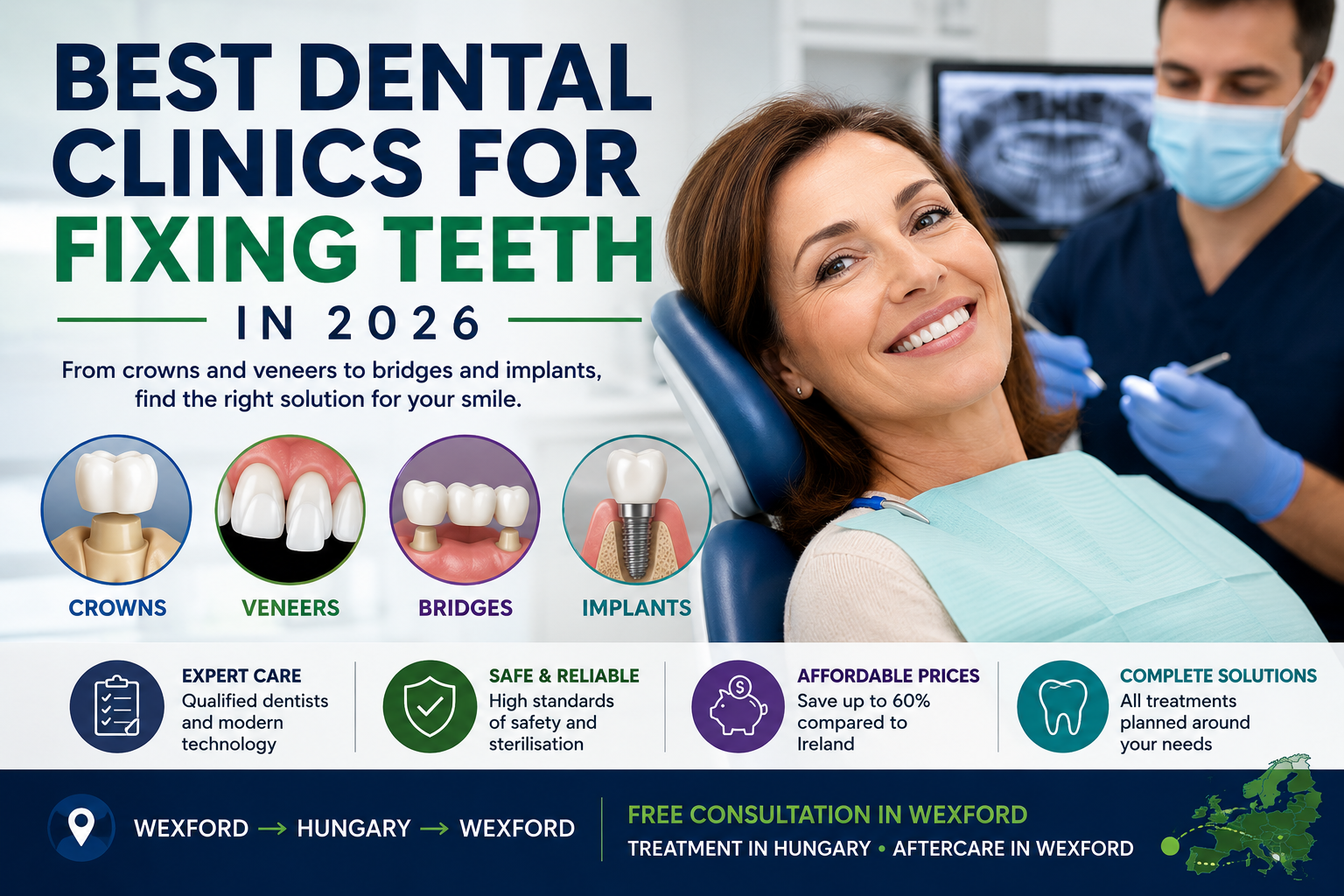
Best Dental Clinics for Fixing Teeth in 2026
If you are searching for the best dental clinics for fixing teeth, the first question is not necessarily which clinic has the biggest advertisement or the lowest price. The most important question is: what treatment do your teeth actually need?
Teeth can become decayed, cracked, chipped, worn, discoloured, crooked, misaligned or lost completely. One patient may need a few dental crowns, another may benefit from veneers, while somebody with badly damaged or missing teeth may require root canal treatment, bridges or dental implants.
The best dental clinic for you should examine the condition of your teeth and gums, explain the available options and create an individual treatment plan rather than recommending the same solution to everyone.
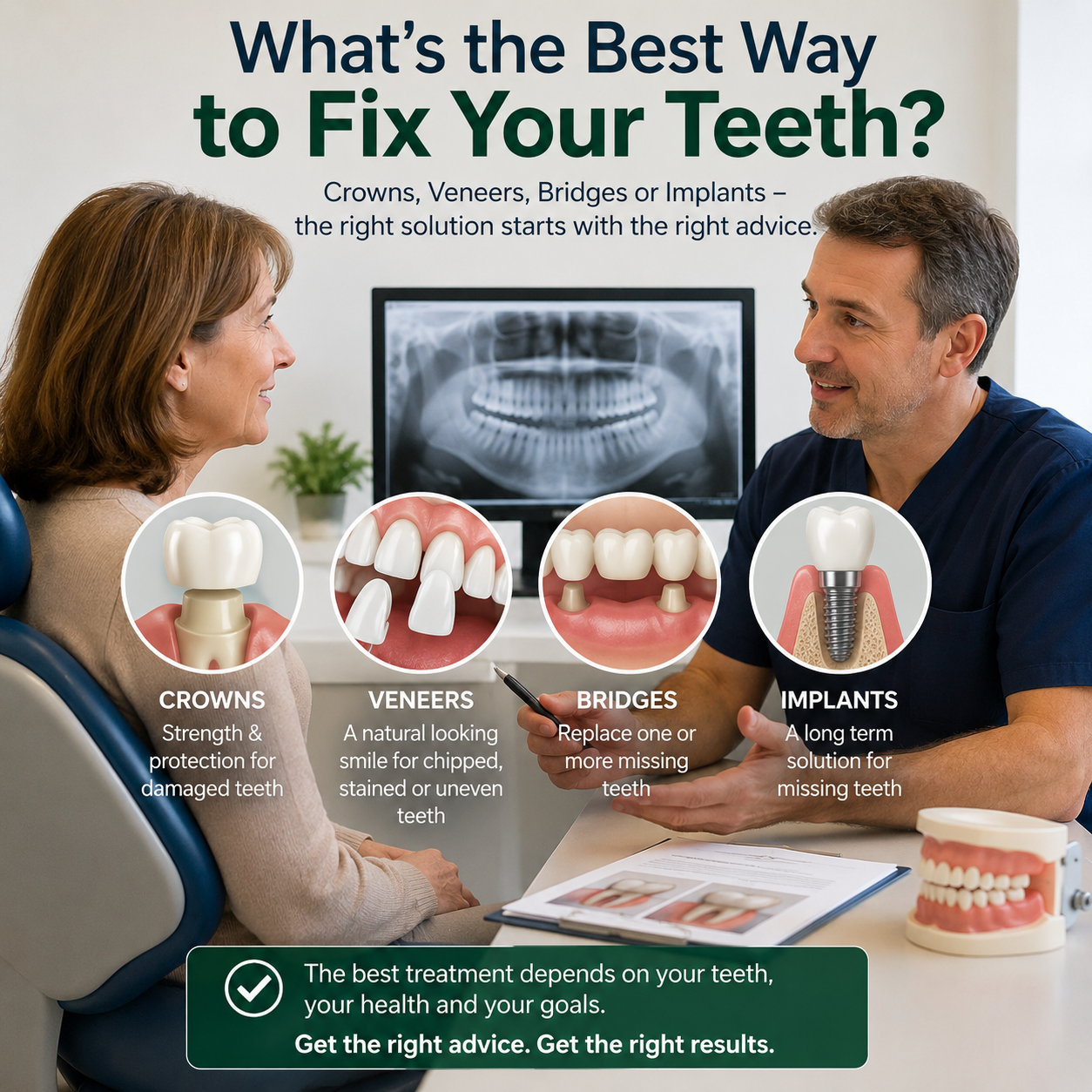
For patients in Ireland considering treatment abroad, Hungarian Dentists Wexford provides scheduled consultations with the visiting team from Perfect Smile Dental Implant Center Hungary. Dental treatment itself is carried out in Hungary, with appropriate reviews and aftercare available during scheduled visits in Wexford.
What Does Fixing Teeth Actually Mean?
People use the phrase “fix my teeth” to describe many different dental problems. You may be unhappy with the appearance of your teeth, experiencing discomfort, finding it difficult to chew or simply worried that damaged teeth are getting worse.
Depending on the condition of your mouth, fixing teeth may involve:
- Dental fillings or restorations for tooth decay
- Composite bonding for selected chips or imperfections
- Dental crowns for weakened, heavily filled or damaged teeth
- Dental veneers to improve the appearance of suitable teeth
- Root canal treatment to help save an infected or badly damaged tooth
- Dental bridges to replace one or more missing teeth
- Dental implants to replace missing teeth
- Full-mouth restoration where several different treatments are required
- Orthodontic treatment where tooth position or bite needs correcting
This is why comparing the best dental clinics for fixing teeth should begin with diagnosis and treatment planning rather than choosing a particular treatment yourself.
Can Damaged or Decayed Teeth Be Saved?
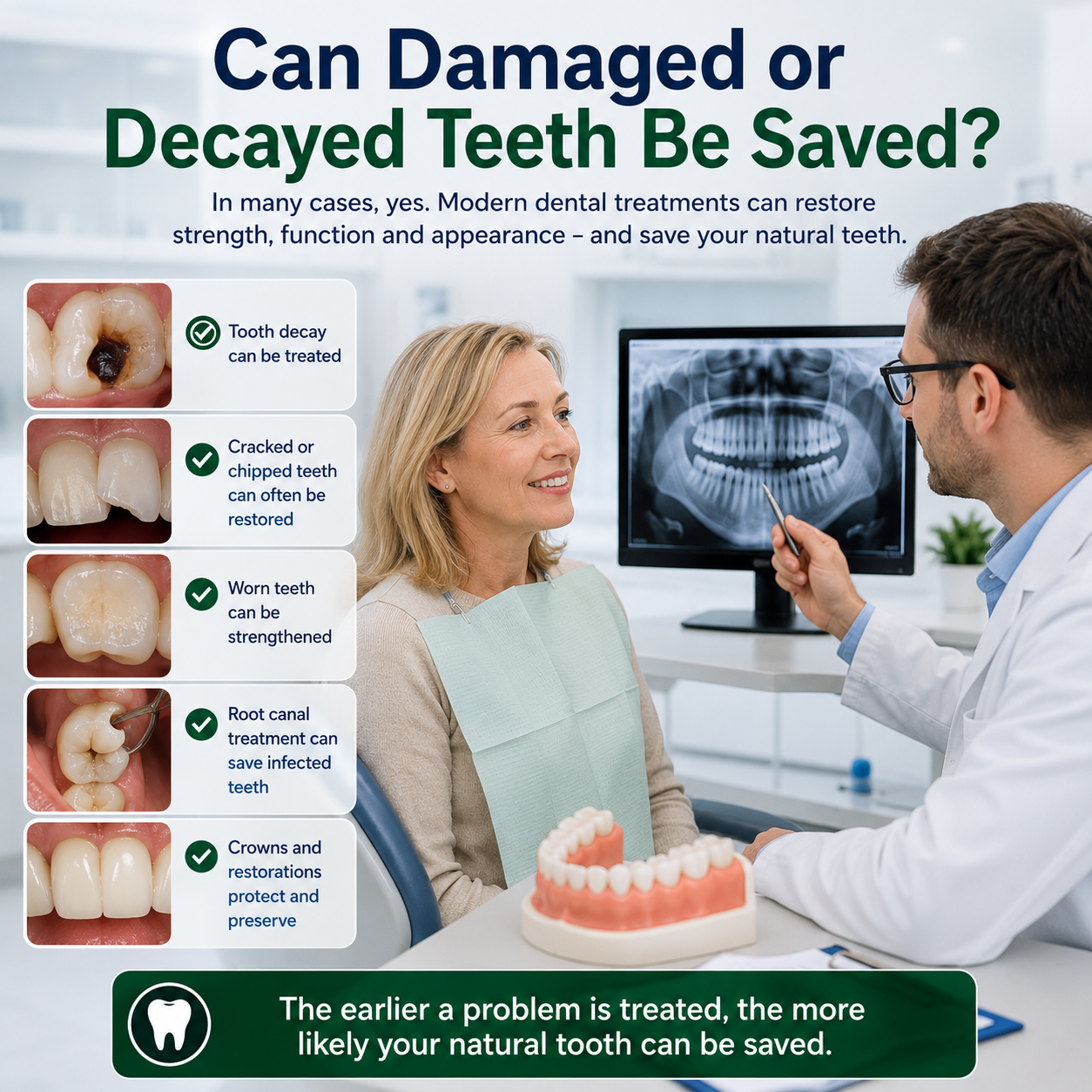
In many cases, yes. A tooth that looks badly damaged does not automatically need to be extracted.
The dentist will normally assess how much healthy tooth structure remains, whether decay is present, the condition of the tooth root and nerve, the surrounding gums and how the tooth fits into your bite.
Depending on those findings, treatment might range from a relatively simple restoration to root canal treatment followed by a dental crown.
The important point is that a damaged tooth should be properly assessed before deciding that it cannot be saved.
Dental Crowns for Damaged, Decayed or Worn Teeth
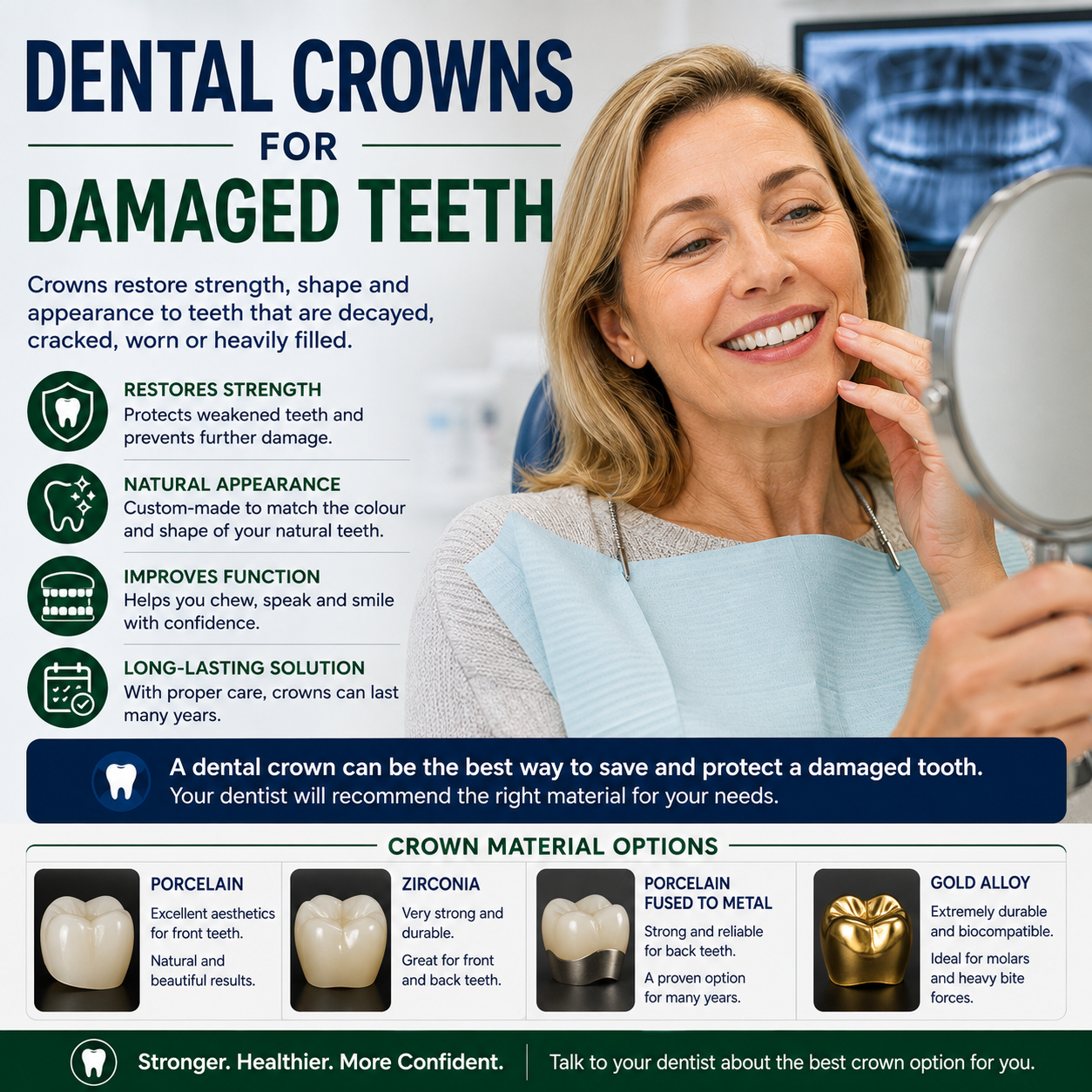
Dental crowns are one of the most commonly used treatments for restoring teeth that have lost a significant amount of their original structure.
A crown covers the visible part of the prepared tooth and can restore its shape, appearance and function. Crowns may be considered when a tooth has been badly damaged by decay, has a large filling, has fractured or has been weakened following root canal treatment.
Different crown materials are available, including porcelain, zirconia, ceramic, porcelain-fused-to-metal and metal alloys. The most appropriate choice depends on where the tooth is located, its appearance, bite forces and the dentist’s clinical assessment.
Our updated guide explains the different types of dental crowns and their cost, including current 2026 prices in Ireland and Hungary.
Dental Veneers for Chipped, Stained or Misaligned Teeth
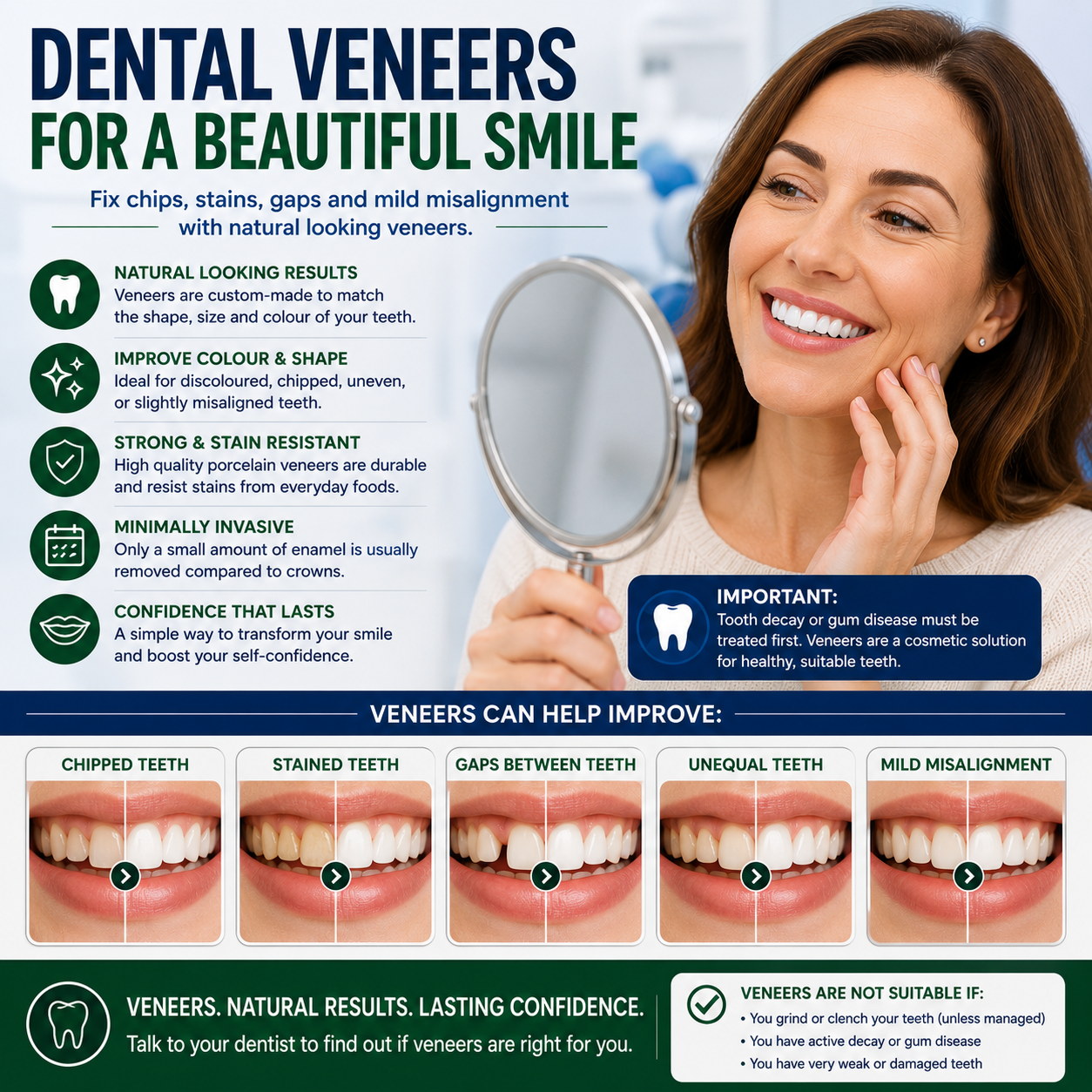
Veneers are different from crowns. Rather than covering the whole tooth, a veneer is a thin restoration placed over the front surface of a suitable tooth.
They may be considered where the main concern is the appearance of teeth that are chipped, stained, uneven, misshapen or mildly misaligned.
However, veneers are not a treatment for active tooth decay or gum disease. Existing dental problems should be assessed and treated before cosmetic veneer treatment is considered.
The American Dental Association provides independent patient information about dental veneers and when they may be suitable.
You can also compare treatment and prices in our guide to the average price for dental veneers.
What About Crooked or Misaligned Teeth?
People looking for the best dental clinics for fixing teeth sometimes describe their problem simply as crooked, uneven or misaligned teeth.
There is no single treatment that is right for every case. Minor cosmetic irregularities may sometimes be improved with bonding or veneers, while crowns may be appropriate where teeth are also significantly damaged.
Where the underlying issue is tooth position or bite alignment, orthodontic treatment may be more appropriate. A good dental clinic should explain the alternatives rather than unnecessarily removing healthy tooth structure simply to produce a faster cosmetic result.
Root Canal Treatment Can Sometimes Save a Tooth
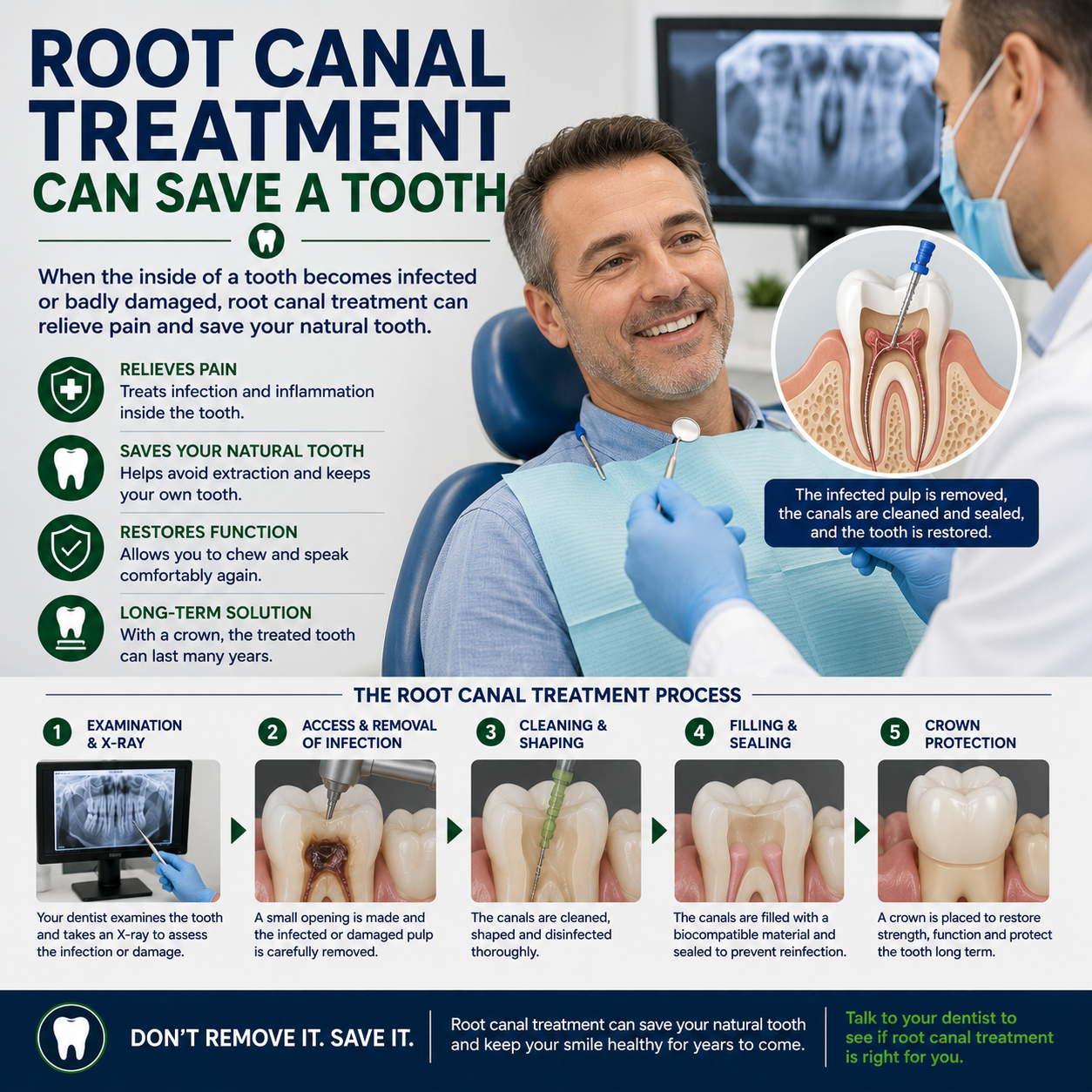
When decay or damage reaches the inner part of a tooth, root canal treatment may sometimes allow the natural tooth to be retained rather than removed.
During root canal treatment, infected or damaged tissue inside the tooth is removed and the root canal system is cleaned and sealed. Depending on the amount of remaining tooth structure, a crown may subsequently be recommended to protect and restore the tooth.
For more information, see our updated guide explaining root canal and crown cost in Ireland and Hungary.
Bridges or Dental Implants for Missing Teeth?
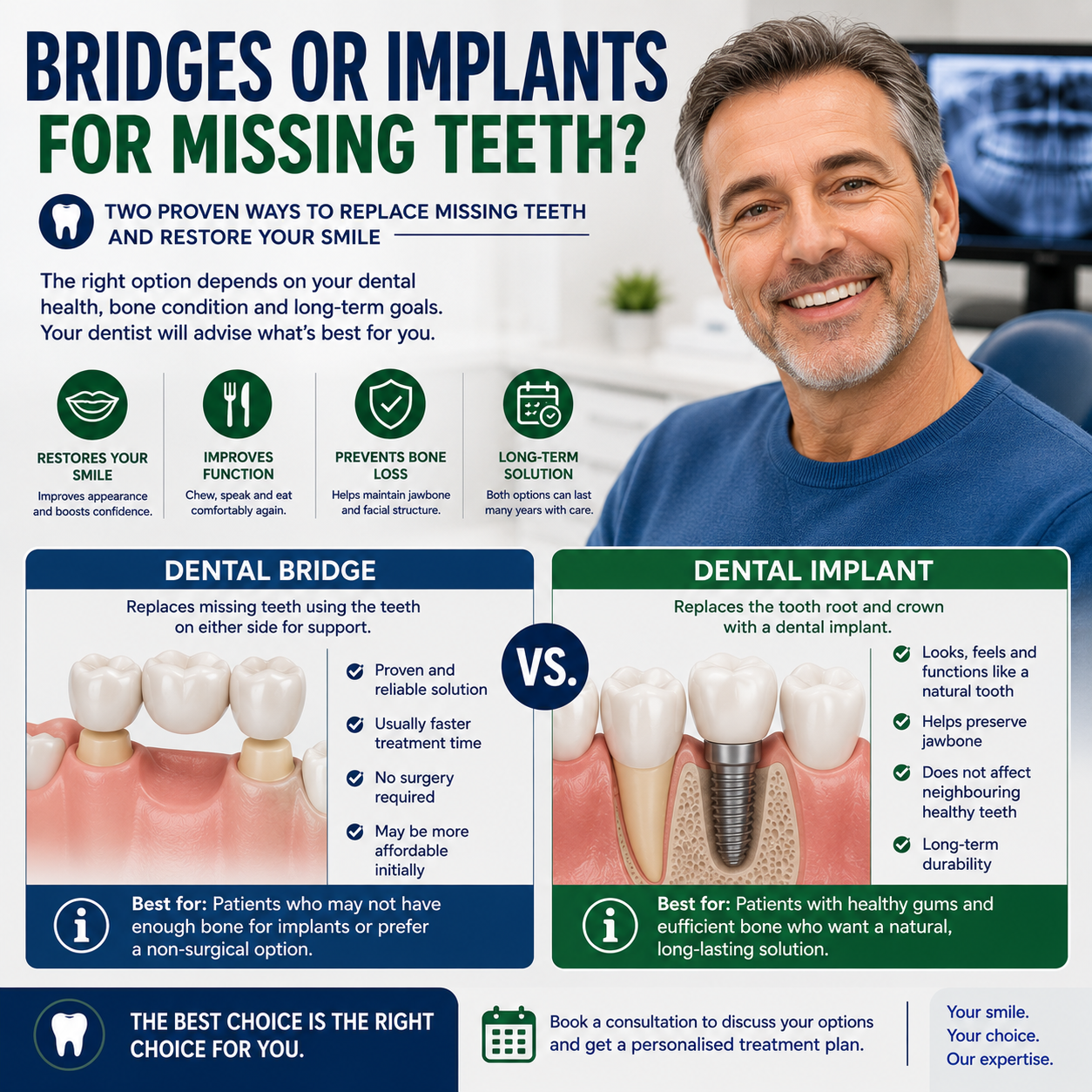
If a tooth cannot be saved or has already been lost, the focus changes from repairing the tooth to replacing it.
A dental bridge is a fixed restoration designed to fill the space left by one or more missing teeth. Depending on the type of bridge, it can be supported by neighbouring natural teeth or by dental implants.
Dental implants provide another way of replacing missing teeth. An implant is placed into the jawbone and can support a replacement crown, bridge or other implant-supported restoration.
The best option depends on factors such as the condition of neighbouring teeth, gums and jawbone, the number of missing teeth, general health and the individual’s treatment plan.
Read our complete guide explaining what a dental bridge is and how much it costs.
The American Dental Association also provides independent information about dental bridges and replacing missing teeth.
Dental Implants for Teeth That Cannot Be Saved
Dental implants may be considered where teeth are already missing or where a tooth cannot be predictably retained.
Implant treatment requires careful examination and planning because the dentist must consider the condition of the gums, available jawbone, bite and general dental and medical health.
If you are considering this option, our updated guide explains dental implant costs in Hungary in 2026.
For extensive tooth loss, see our guide to full-mouth dental implant costs in 2026.
You can also read the American Dental Association’s independent patient information explaining how dental implants work.
Sometimes the Best Treatment Is a Combination
Many people searching online for somewhere to “fix all my teeth” do not fit neatly into one treatment category.
For example, a patient could have several healthy teeth, two badly broken teeth, an old missing tooth, discoloured front teeth and another tooth requiring root canal treatment.
The appropriate treatment plan might therefore combine crowns, a bridge or implant, root canal treatment and cosmetic restorations.
This is where comprehensive treatment planning becomes particularly important. The aim should be to treat each tooth according to its condition and preserve healthy natural teeth wherever clinically appropriate.
How to Choose the Right Dental Clinic for Fixing Your Teeth
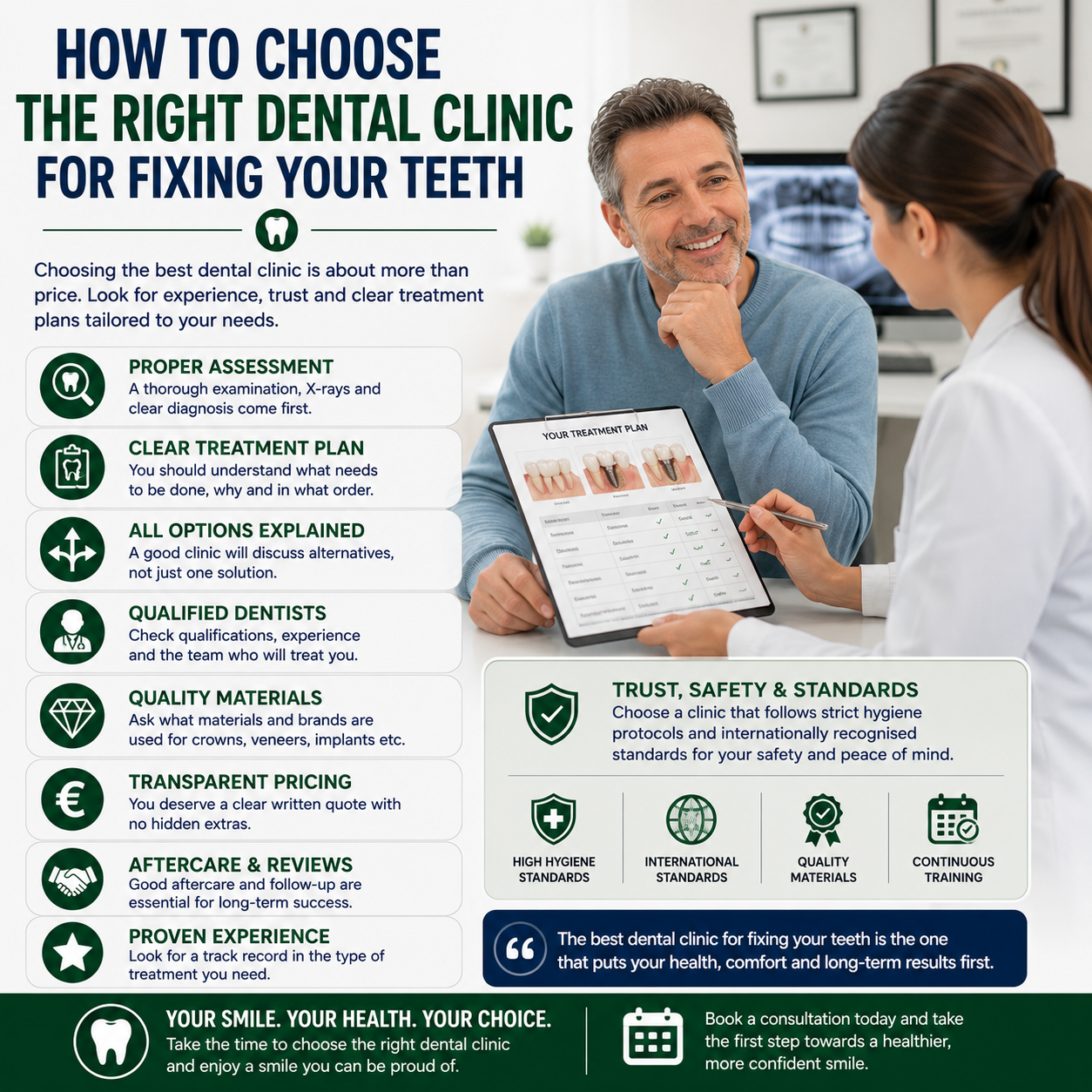
The phrase best dental clinics for fixing teeth produces plenty of choices, but a clinic should be judged on much more than photographs of perfect smiles or the lowest advertised price.
Before committing to significant dental treatment, consider the following:
- Proper assessment: Are your teeth, gums, bite and relevant X-rays examined before treatment is recommended?
- Clear treatment plan: Do you understand exactly which teeth will be treated and why?
- Treatment alternatives: Have reasonable alternative treatments been discussed?
- Dentist qualifications: Do you know who will be carrying out your treatment?
- Materials: Are the crowns, veneers, implants or other materials clearly identified?
- Complete costs: Does your quotation explain what is and is not included?
- Aftercare: What happens if you need a review after treatment?
- Relevant experience: Does the clinic regularly carry out the type of treatment you require?
If you are checking a dentist practising in Ireland, you can use the official Dental Council of Ireland Register of Dentists.
Compare the Main Ways of Fixing Teeth
Possible treatment: Filling or restoration
Repairs damaged tooth structure and helps preserve the natural tooth.
Possible treatment: Bonding or veneer in suitable cases
Can improve the shape and appearance of the tooth.
Possible treatment: Dental crown
Restores, strengthens and protects the remaining tooth.
Possible treatment: Root canal treatment
Treats the inside of the tooth and may allow the natural tooth to be retained.
Possible treatment: Dental bridge
Provides a fixed replacement for one or more missing teeth.
Possible treatment: Dental implant and crown
Replaces a missing tooth with a fixed implant-supported restoration.
Possible treatment: Full-mouth or implant-supported restoration
Can restore multiple missing teeth using an individually planned combination of treatments.
Fixing Several Teeth Can Become Expensive
Cost becomes particularly important when one tooth is not the only problem.
A patient who needs several crowns, veneers, root canal treatments, bridges or replacement teeth can quickly face a substantial overall dental bill.
This is one reason some Irish patients compare treatment costs with established dental clinics elsewhere in Europe, including Hungary.
Rather than relying on old prices quoted in individual articles, see our regularly updated 2026 dental treatment price list for current Perfect Smile prices for crowns, veneers, implants, bridges, root canal treatment and other procedures.
Dental Treatment in Hungary With Support in Wexford
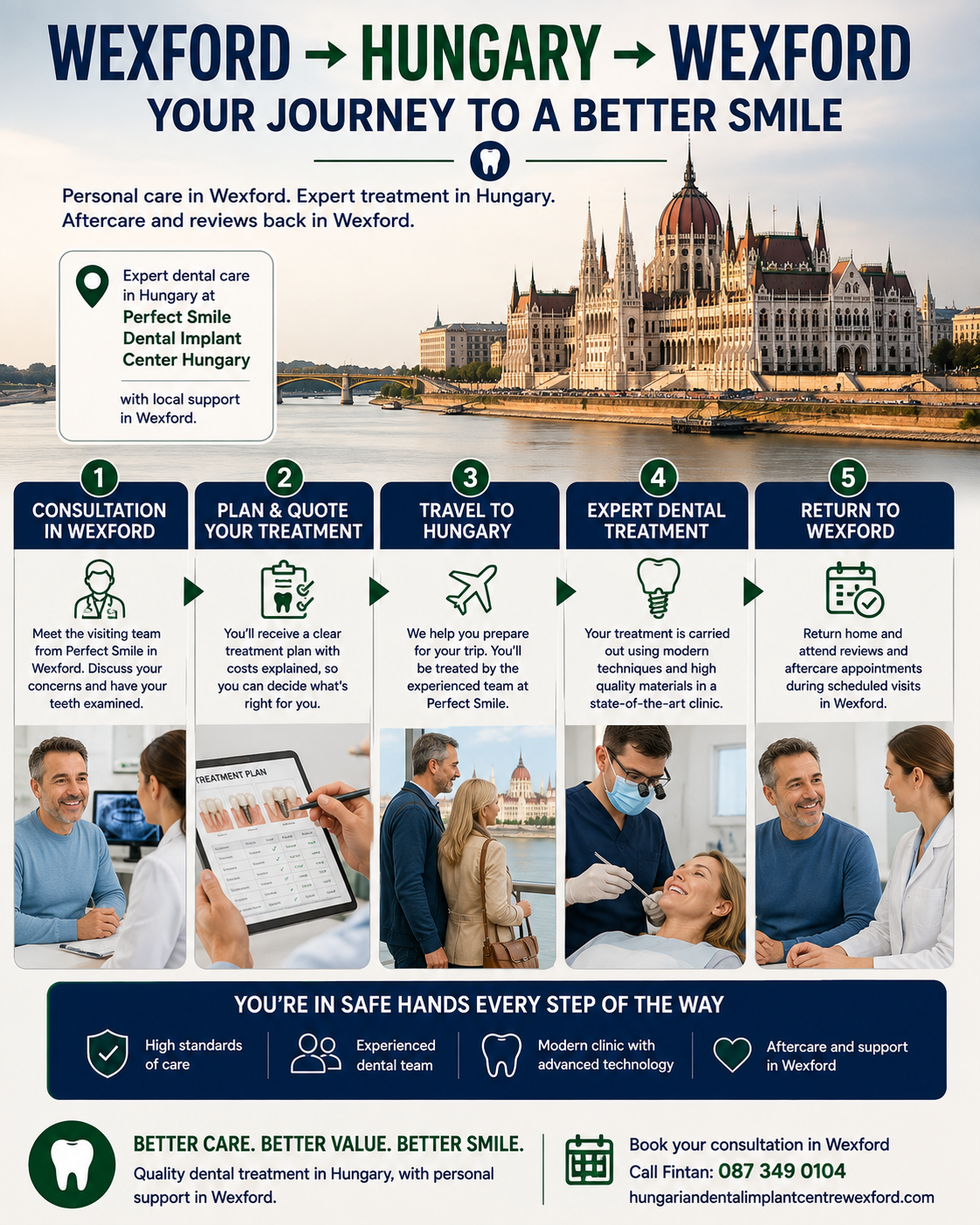
Irish patients considering Perfect Smile Dental Implant Center Hungary can begin locally rather than booking treatment abroad without first understanding what is required.
A small team from Perfect Smile visits Hungarian Dentists Wexford for scheduled consultations, reviews and appropriate follow-up appointments.
The process is straightforward:
- Arrange a scheduled consultation in Wexford.
- Have your dental needs assessed and receive your individual treatment plan.
- Review the proposed treatment and costs before deciding.
- If you choose to proceed, travel to Perfect Smile Dental Implant Center Hungary for your dental treatment.
- Return to Ireland with appropriate reviews and aftercare available during scheduled visits in Wexford.
Dental treatment is not carried out at Hungarian Dentists Wexford. The main dental treatment takes place at Perfect Smile Dental Implant Center Hungary.
You can learn more about the clinic, treatment facilities, dentists and patient journey in our complete guide to Perfect Smile Dental Implant Center Hungary.
Start With a Treatment Plan, Not a Treatment
Finding the best dental clinics for fixing teeth should not be about deciding in advance that you need veneers, crowns or implants.
Start by finding out which teeth can be preserved, which teeth genuinely need restorative treatment and whether any missing teeth need replacing.
Sometimes the solution may be much simpler than expected. In other cases, several different treatments may be needed to restore function, appearance and confidence.
If you live in Ireland and would like to discuss treatment at Perfect Smile Dental Implant Center Hungary, contact Fintan at Hungarian Dentists Wexford to find out when the next scheduled clinic visit is taking place.
Arrange a Free Consultation in Wexford
Discuss the condition of your teeth, possible treatment options and current Perfect Smile prices before deciding whether dental treatment in Hungary is right for you.
Call Fintan: 087 349 0104
Frequently Asked Questions
What is the best treatment for badly damaged teeth?
It depends on how much healthy tooth remains, whether decay or infection is present and the condition of the root and surrounding gums. Treatment may range from a filling or crown to root canal treatment. If a tooth cannot be retained, replacement options may include a bridge or dental implant.
Can veneers fix decayed teeth?
Veneers are primarily used to improve the appearance of suitable teeth. Active tooth decay or gum disease should normally be treated before veneer treatment is considered.
Are crowns better than veneers?
They serve different purposes. Veneers mainly cover the front surface of a tooth to improve its appearance, while crowns cover substantially more of the tooth and are commonly used where greater restoration or protection is required.
Can a dentist fix all my teeth at once?
Some restorative and cosmetic work can be completed relatively quickly, while treatments such as dental implants can involve healing periods and more than one treatment stage. Your treatment plan should explain the sequence and expected timescale.
Should badly damaged teeth always be removed?
No. Some badly damaged teeth can still be restored. A dentist needs to examine the tooth before deciding whether restoration, root canal treatment, a crown, extraction or another option is appropriate.
How do I find the best dental clinic for fixing my teeth?
Look for proper examination and diagnosis, qualified dental professionals, clear treatment options, transparent costs, suitable materials and a clear plan for reviews and aftercare. Do not choose complex dental treatment solely because of the lowest advertised price.
Medical information notice: This article provides general information about dental treatment and does not replace examination, diagnosis or treatment advice from a qualified dental professional. The appropriate treatment depends on each patient’s individual dental condition.