
How do implant dentures work
Are you tired of your traditional dentures? Implant dentures are a step up treatment but how do implant dentures work, let’s take a closer look.
How Do Implant Dentures Work?
Many patients who wear traditional dentures often struggle with loose fits, discomfort, or difficulty eating and speaking.
Modern implant dentures provide a far more stable and natural-feeling alternative.
But exactly how do implant dentures work, and why are so many Irish patients choosing to have this treatment done in Perfect Smile Dental Implant Centre, Hungary, with free consultations and after-care in Hungarian Dentists Wexford?
What Are Implant Dentures?
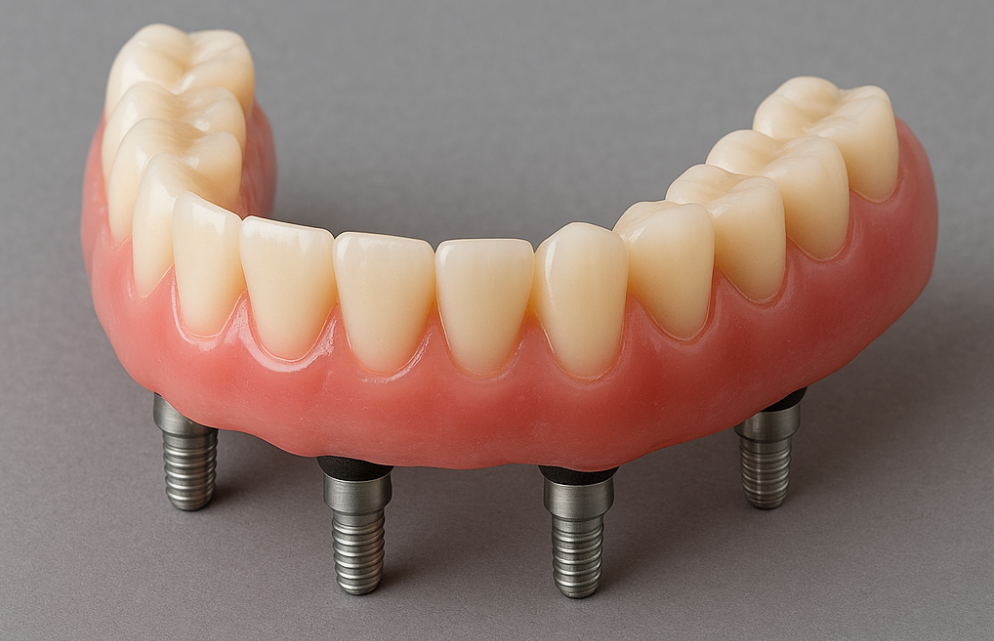
Implant dentures, also called implant-supported dentures, are a hybrid solution that combines the benefits of dental implants with the full-arch coverage of dentures.
Instead of resting on the gums, these dentures are anchored to titanium implants that are surgically placed in the jawbone.
The implants act as artificial tooth roots, holding the denture firmly in place, essentially this is the answer to how do implant dentures work.
This advanced technique eliminates the need for messy adhesives and prevents the slipping or movement that many patients experience with conventional dentures.
Once secured, the dentures look, feel, and function much like natural teeth, in
According to studies the success rate is as high as 98.7%.
How Do Implant Dentures Work? Step-by-Step
Understanding how implant dentures work helps patients see why this option is so reliable and long-lasting. Here’s a simple overview of the process:
- Consultation and Examination
The process begins with a free consultation in Hungarian Dentists Wexford, where a dental specialist examines your mouth and jawbone health. Digital X-rays and scans help assess bone density and determine whether you are a good candidate for implant dentures. - Treatment Planning
If you are suitable, a detailed plan is created at Perfect Smile Dental Implant Centre in Hodmezővásárhely, Hungary. This includes how many implants you will need (typically 2–6 per arch) and the best type of denture to use — removable overdentures or fixed full-arch bridges. - Implant Placement
Titanium implants are placed into the jawbone in a short, painless procedure (usually under local anaesthetic). These act as the secure anchors for your future denture. Over the following months, the bone naturally fuses with the implants in a process known as osseointegration, creating a solid foundation. - Temporary Restoration
During healing, you may wear temporary dentures so that you can eat and smile comfortably while the implants bond with the bone. - Attachment of Dentures
Once healing is complete, your final dentures are precisely fitted and attached to the implants. Depending on your treatment plan, they may either snap on and off for easy cleaning or be fixed permanently for a seamless, natural look.
Types of Implant Dentures
There are two main types of implant-supported dentures:
Removable Overdentures: These dentures click securely onto the implants but can be removed for cleaning. They provide excellent stability and are more affordable and are part of the answer to how do implant dentures work.
Fixed Full-Arch Implant Dentures (All-on-4 / All-on-6): These are permanently attached to the implants and can only be removed by a dentist. They feel almost identical to natural teeth and offer the highest level of comfort and aesthetics.
Implant dentures work very well especially if a patient has been wearing traditional dentures for a long time, contact Fintan 0873490104.
The Benefits of Implant Dentures
- Superior Stability: No slipping, wobbling, or embarrassing moments while speaking or eating.
- Natural Appearance: Custom-designed to look and feel just like real teeth.
- Improved Chewing Ability: Allows you to enjoy a wide variety of foods again.
- Bone Preservation: Dental implants stimulate the jawbone, preventing bone loss that occurs with traditional dentures.
- Long-Term Value: With proper care, implant dentures can last for decades.
Why Irish Patients Choose Hungary
Many patients from Ireland are discovering that the same high-quality implant denture treatments can cost 40–70% less in Hungary compared with Irish dental clinics.
For example, a full set of implant dentures that might cost €12,000–€15,000 in Ireland can often be completed for €6,000–€7,000 at Perfect Smile Dental Implant Centre Hungary — all while receiving free consultation and after-care in Wexford.
That’s why Hungarian Dentists Wexford serves as the perfect link — offering Irish patients a local contact point with Fintan (087 349 0104) to discuss treatment options.
In addition to find out more about how do implant dentures work, arrange travel plans, and manage after-care once they return home.
Are Implant Dentures Right for You?
If you’re currently wearing dentures that move, rub, or cause discomfort, or if you’ve lost multiple teeth and want a more permanent solution, implant dentures may be ideal.
They provide confidence, comfort, and function that traditional dentures simply cannot match.
A quick consultation in Wexford that takes 30 minutes approximately can determine your suitability, and the Hungarian team will create a detailed treatment plan tailored to your needs and budget.

Final Thoughts
So, how do implant dentures work?
They combine modern dental implant technology with natural-looking dentures to restore your smile, improve your bite, and boost your confidence — all at a fraction of Irish prices.
To learn more or arrange your free consultation in Wexford, contact Hungarian Dentists Wexford today and find out how Perfect Smile Dental Implant Centre Hungary can help you smile again — securely, beautifully, and affordably.
Call Fintan now on 087 349 0104.
References
https://pmc.ncbi.nlm.nih.gov/articles/PMC5751727/

8 Comments
This guide is both educational and empowering — thank you for demystifying implant dentures with such clarity.
You’ve created a resource that speaks to both the technical process and the emotional impact of regaining a confident smile.
What makes this post stand out:
• Clear step-by-step explanation of how implant dentures work
• Honest comparison between removable and fixed options
• Emphasis on long-term value and bone preservation
• Transparent pricing and cross-border care strategy for Irish patients
• Human touch — from consultation to after-care, the journey feels supported
At LANICHEDUCLIP, we often say: “Restoring a smile is restoring self-trust.”
This post could easily become a bilingual capsule or visual guide for patients navigating dental decisions with clarity and dignity.
The Wexford–Hungary connection is a brilliant model of accessible care — combining affordability, expertise, and local support through Fintan.
Thank you for making dental health feel approachable, strategic, and deeply personal.
Thank you.
Wow, I didn’t know how dental implants worked, and now I have a much better idea. The teeth look perfect once in and one wouldn’t even know they were fake. It is great to see that fitting the titanium is an almost painless process, as it definitely sounds painful.
I guess the best bet would be to go to Hungary to have it done, but I wonder how long you would need to go for to have the whole process done. It looks like quite a number of weeks which could also work out pretty pricey.
Hi Michael,
Thank you. Dental implants treatment takes exactly two weeks with a gap of four months in between to allow the implants fuse with the jawbone.
Fintan
This is an exceptionally clear and well-structured article, thank you for sharing. You’ve managed to take a complex dental procedure and break it down in a way that is both educational and reassuring for patients. I particularly appreciated the explanation of the two main types of implant dentures (removable vs. fixed), as this is a key decision point for anyone considering this treatment.
The section on osseointegration was especially helpful; understanding how the jawbone fuses with the implant to create a stable foundation makes the entire process feel more logical and less intimidating. It’s clear that this is a long-term solution that prioritizes both function and health.
If you don’t mind me asking, based on your clinical experience, what is the most important factor for patients to consider when deciding between removable and fixed implant dentures? Is it typically bone density, lifestyle needs, or budget? Thank you again for such a valuable and trustworthy resource.
Hi Cian,
The most important factor is usually bone density — fixed options like All-on-4 or All-on-6 need stronger bone to support the implants securely, while removable implant dentures can work even with less bone. Budget also plays a big role, as fixed bridges cost more but feel just like real teeth. Lifestyle matters too — some patients prefer the stability of fixed teeth, others like the flexibility of removable dentures.
At Perfect Smile Dental Implant Centre, Hungary, we help you find the best balance between comfort, cost, and long-term results — with free consultations and aftercare in Hungarian Dentists Wexford.
???? Call Fintan (0873490104) to discuss your best treatment options today.
Thank you Fintan
Really clear explainer. From the patient side, the biggest wins with implant dentures are stability and bite confidence—you can actually enjoy crisp veggies again. The timeline felt manageable for me, with the two key phases being healing and then the final attachment. What helped most was sticking to soft foods early, using a water flosser to clean under the bar or around locators, and scheduling regular checks to replace worn O-rings or clips before they get loose. A tiny dab of denture adhesive on day one post-pickup also cut down on sore spots while I adjusted. Overall, once they settle, maintenance becomes routine and the quality-of-life boost is real.
Marios
Thanks Marios