Can Prescription Drugs Affect Teeth?
Can prescription drugs Affect teeth.? Yes, and in more ways than you can imagine.
Hi, I’m Fintan (0873490104), the local coordinator here at Hungarian Dentists Wexford.

One question I hear more often than you might think is this:
Can prescription drugs affect teeth?
The short answer is most definitely — long term prescription medication can affect your teeth.
And in many cases, people don’t realise the connection until there’s already discomfort, decay, teeth falling out or gum problems developing.
I wanted to write this in plain language, the way I’d explain it to someone sitting across from me in the clinic.
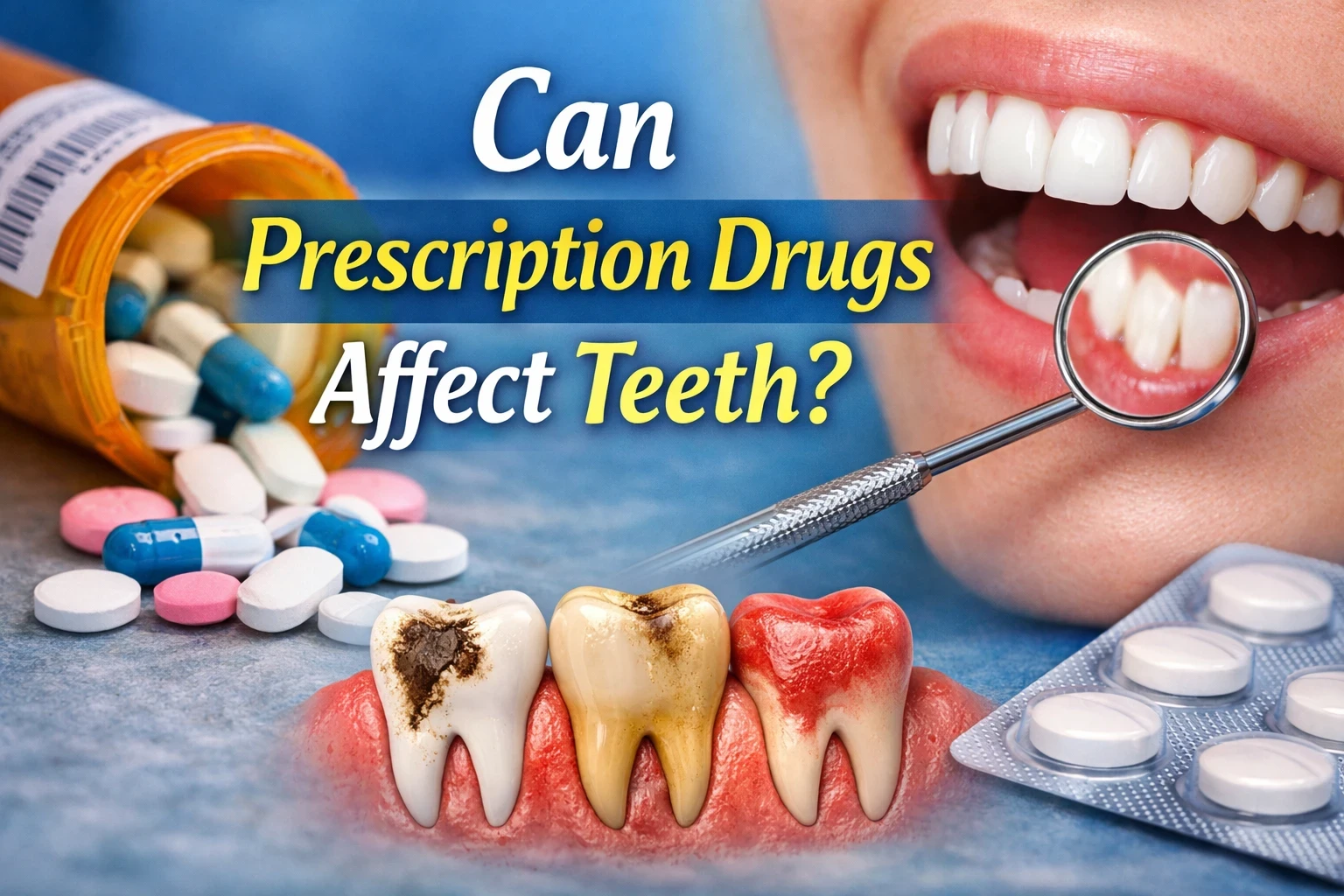
How Can Prescription Drugs Affect Teeth?
Prescription medications are essential. They manage blood pressure, treat anxiety, control pain, regulate hormones, and protect the immune system.
But while they’re helping one part of the body, they can quietly affect the mouth.
Over the years, I’ve seen patients surprised that their new medication was contributing to:
- Dry mout
- Increased tooth decay
- Gum swelling
- Teeth falling out
- Staining
- Teeth grinding
Let’s break down why this happens.
The Most Common Issue: Dry Mouth
If there’s one side effect I see repeatedly, it’s dry mouth.
Many common medications — including antidepressants, antihistamines, blood pressure tablets, and certain pain medications — reduce saliva flow.
Saliva isn’t just “spit.” It’s protective. It neutralises acid, washes away food particles, and keeps harmful bacteria under control.
When saliva drops, cavities increase.
I’ve seen patients with excellent brushing habits suddenly develop multiple small cavities within a year — and the only major change was a new prescription medication.
If you’re noticing constant dryness, sticky saliva, difficulty swallowing, or a burning sensation in the mouth, that’s something worth addressing early.
At our clinic, we offer a free x-ray and consultation where we review not just your teeth — but your full health picture, including medications.
You can learn more here: https://hungariandentalimplantcentrewexford.com/free-xray-and-consultation/
Gum Swelling and Overgrowth
Certain medications, particularly some blood pressure drugs, anti-seizure medications, and immune-suppressing drugs, can cause the gums to thicken or overgrow.
This makes cleaning more difficult.
And once plaque builds up around swollen gum tissue, inflammation follows.
Over time, that can lead to periodontal disease.
I’ve seen mild swelling turn into significant gum pockets simply because no one connected the medication to the change.
The key is early intervention. Regular checkups allow us to monitor changes before they become serious.
Teeth falling out
I have seen and heard from patients of teeth falling out due to long term use of prescription medication.
If someone is on long-term medication and notices dry mouth, bleeding gums, or increasing cavities, early dental intervention makes a huge difference.
However, if you notice that teeth have fallen out its time to get in touch with Fintan 087 3490104.
Ask for a free consultation in Wexford. Treatment is performed in Perfect Smile Dental Clinic Hungary.
Aftercare is provided in Hungarian Dentists Wexford clinic.
Tooth Discoloration
Some antibiotics, especially tetracycline (particularly when taken during childhood), can permanently stain developing teeth.
Other medications can cause surface staining over time.
While staining itself isn’t always harmful, it can affect confidence — and that matters.
During consultations, we assess whether discolouration is superficial (cleanable) or deeper within the enamel structure. That determines the next steps.
Teeth Grinding Linked to Medication
Certain antidepressants and stimulant medications are associated with bruxism — involuntary grinding or clenching.
Patients often don’t realise they’re grinding until:
• Their teeth feel shorter
• They develop jaw pain
• They crack a filling
• A partner mentions nighttime grinding
Changes in Taste and Eating Habits
Some prescriptions alter taste perception.
When food tastes “off,” people sometimes increase sugar intake or snack more frequently — often without noticing the shift.
That behavioural change alone can increase decay risk.
It’s subtle, but it adds up.
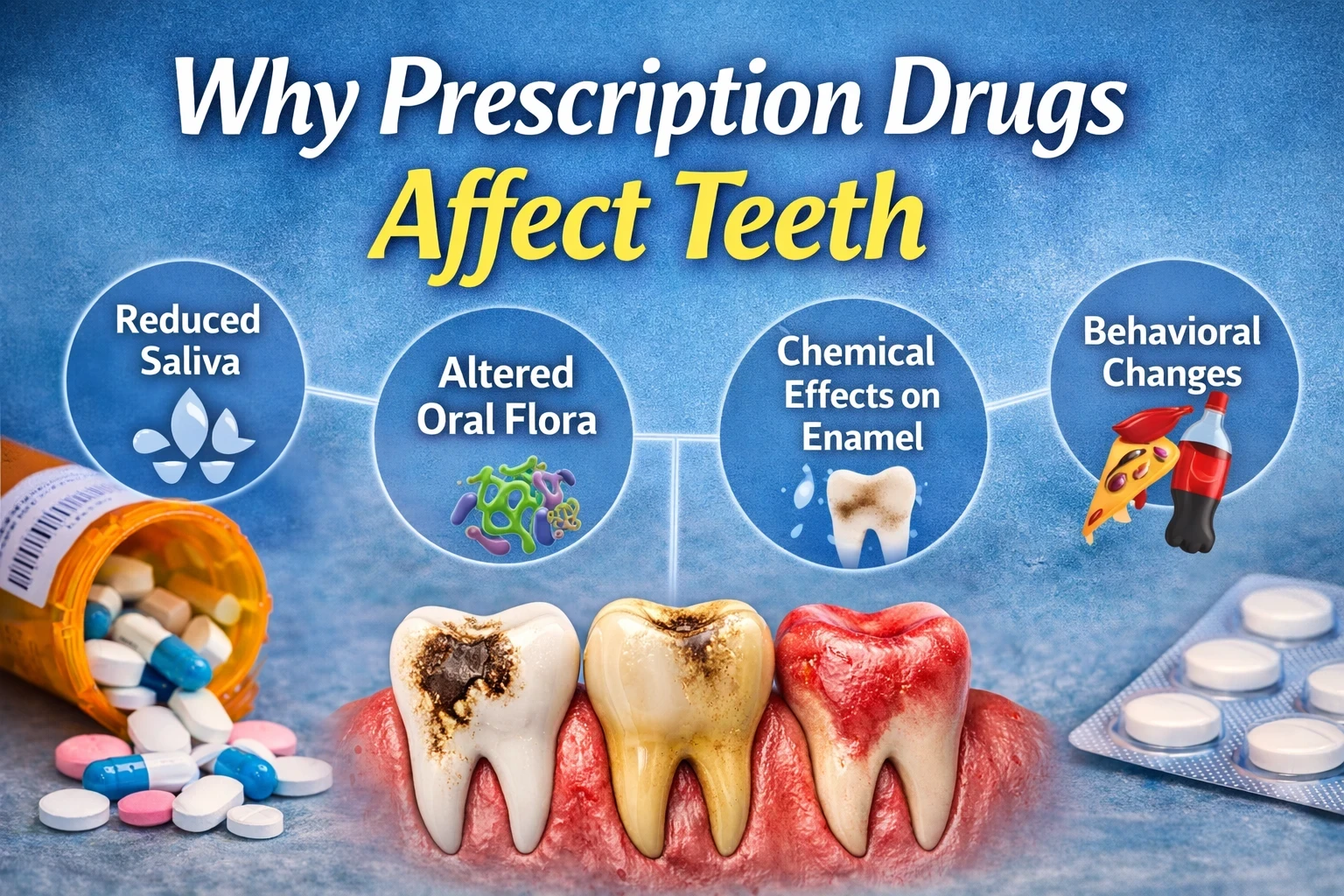
Why Prescription Drugs Affect Teeth
There are four main reasons medications impact oral health:
- Reduced saliva
- Changes in oral bacteria balance
- Direct effects on enamel or gum tissue
- Behavioural side effects (fatigue, altered appetite, dry mouth discomfort)
The mouth doesn’t operate separately from the rest of the body. Everything is connected.
When Should You Be Concerned?
If you’re taking long-term medication and notice:
• Persistent dry mouth
• Sudden increase in cavities
• Gum bleeding or swelling
• Tooth sensitivity
• Cracks or flattened teeth
• Chronic bad breath
Or you may have teeth falling out.
It’s time to have a proper assessment.
Get in touch, call Fintan on 0873490104.
You don’t need to stop your medication — that’s a decision for your GP or consultant — but you do need a dental plan that accounts for it.
Protecting Your Teeth While on Medication
Here’s what I usually advise patients:
- Tell our dentist exactly what you’re taking. Bring a full medication list.
- Increase fluoride protection if needed. Sometimes we recommend higher-fluoride toothpaste.
- Stay hydrated consistently. Small sips of water throughout the day help counteract dryness.
- Use sugar-free gum to stimulate saliva.
- Don’t skip checkups. If you’re on long-term medication, we may recommend slightly more frequent visits.
If damage has already occurred, we also discuss restorative options. In some cases, that may include implants or advanced restorative care.
If you’re curious about implant treatment and pricing, you can find more details here: https://hungariandentalimplantcentrewexford.com/cost-of-dental-implants-cost/
A Final Word
So, can prescription drugs affect teeth?
Yes — but that doesn’t mean dental problems are inevitable.
Most medication-related oral issues are manageable when we catch them early.
The biggest mistake I see is people assuming their new symptoms are “just one of those things.”
They’re not.
If you’re unsure whether your medication is affecting your mouth, book a consultation.
Talk to Fintan on 0873490104.
We’ll look at the full picture — not just your teeth in isolation.
Your smile is part of your overall health. And it deserves the same attention as the rest of you.
Scientific Evidence
https://pubmed.ncbi.nlm.nih.gov/21884143