If my teeth don’t look nice, what can be done depends on why: staining and mild yellowing usually respond to whitening, chips and small gaps to bonding, and wider shape, colour or wear problems to veneers. Teeth that are missing, loose or too damaged to restore need implants instead. A dentist’s exam confirms which applies.
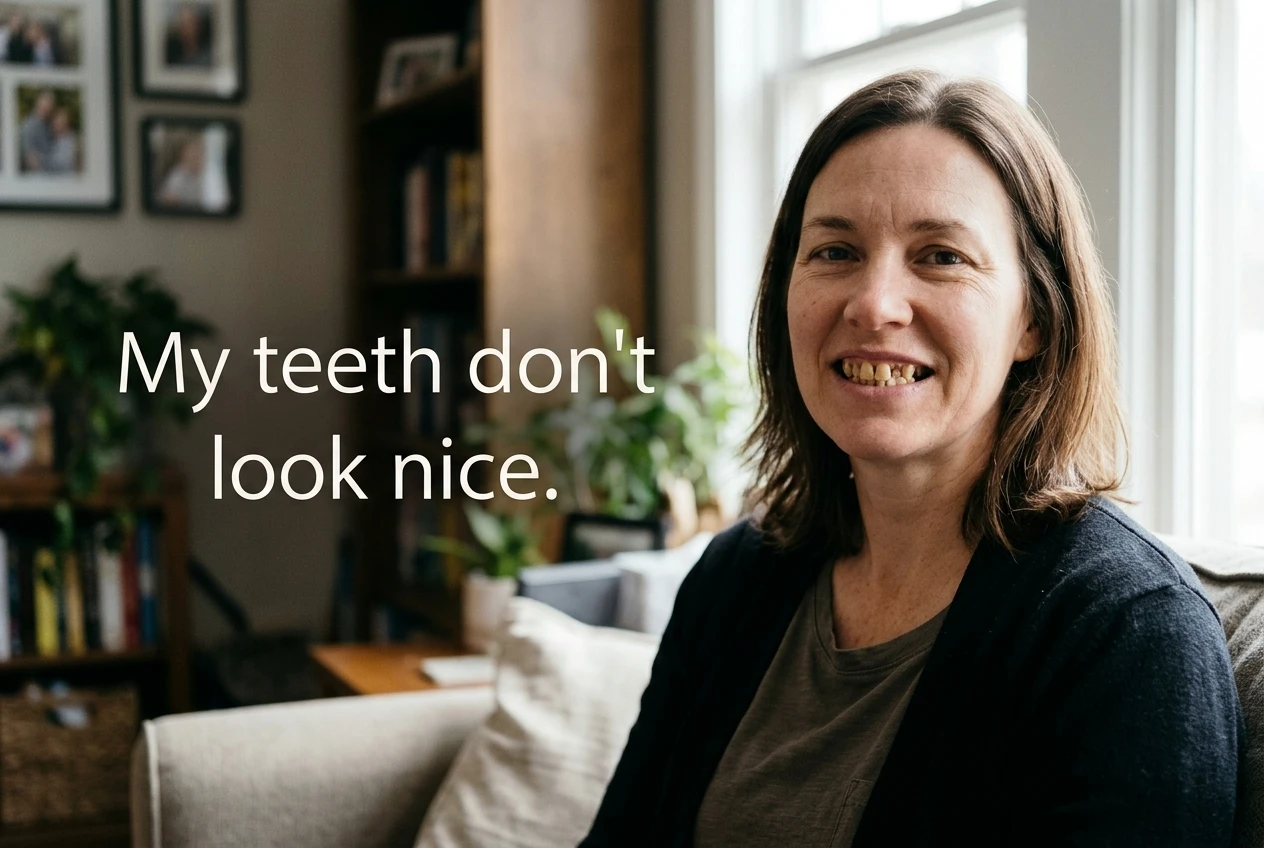
Why do my teeth look yellow or discoloured?
Teeth look yellow or discoloured for several different reasons, and the reason decides which treatment will work. Choosing a treatment before knowing the cause is how people pay for whitening that cannot fix their problem.
These are the most common causes:
- Surface staining. Tea, coffee, red wine, cola and smoking leave brown or yellow film on the enamel. This is the easiest kind to treat.
- Age. Enamel wears thinner over the years, and the darker dentine underneath shows through. The whole smile looks more yellow even if you brush well.
- Discolouration from inside the tooth. A tooth that took a knock or had a root canal can turn grey or dark. Some medicines taken in childhood, and fluorosis, can leave brown or white marks within the enamel.
- Chips, cracks and uneven edges. These catch the light differently and make a tooth look dull or dirty even when the colour is fine.
- Wear. Grinding or acid erosion shortens and flattens the teeth, which can make a smile look older and more yellow.
- Gaps and shape. Small spaces and misshapen teeth are not a colour problem at all, so whitening will not change them.
- Old fillings and crowns. Fillings can darken over time or no longer match the tooth around them.
A quick way to sort what you see
Look at your teeth in daylight, then work through these in order:
- Is the colour even across all your teeth, or is one tooth darker than the rest?
- Does the colour come from the surface (brownish film near the gum line, between teeth) or does it seem to come from within?
- Are any edges chipped, short or flat?
- Are there gaps, or teeth that are missing, loose or crowded?
This is a rough sort and not a diagnosis. The table below shows how each pattern usually maps to a treatment.
What you see | Likely cause | Usual option |
|---|---|---|
Even yellow or brown surface stain | Food, drink, smoking | Scale and polish, then whitening |
Overall darker shade | Thinning enamel with age | Whitening, or veneers if whitening falls short |
One grey or dark tooth | Past injury or root canal | Dentist’s choice: internal whitening, bonding, veneer or crown |
Small chip or uneven edge | Knock or biting on something hard | Bonding |
Small gap between front teeth | Natural spacing | Bonding, veneers or braces |
Short, flat, worn edges | Grinding or acid | Bonding or veneers, plus a night guard |
Missing or loose tooth | Decay, gum disease, bone loss | Assessment for an implant or other restoration |
How can I make my teeth look nicer, and is whitening safe for enamel?
For stained or slightly yellow natural teeth, professional whitening is the most conservative way to make them look nicer, and it is safe for enamel when a registered dentist supervises it. The gels use hydrogen peroxide or carbamide peroxide to lighten the colour inside the tooth, without removing enamel.
A dentist usually starts with a scale and polish, because whitening gel works better once the surface film is gone. They can then supply custom trays with a measured amount of gel, or apply a stronger gel in the chair. EU rules restrict the strength of whitening products sold to the public and reserve the stronger ones for dentists, which is one reason to be careful about anyone who is not a dentist offering to whiten your teeth. You can check that a dentist is registered on the Dental Council of Ireland website.
Whitening has limits you should know about before you start:
- It changes natural tooth colour only. Crowns, veneers, bonding and fillings stay the shade they are, so they can end up looking darker than whitened teeth around them.
- Temporary sensitivity is common during treatment and usually settles after it stops. Gum irritation can happen if gel touches the gums.
- Results fade, faster if you keep drinking coffee, tea and red wine or smoke.
- It cannot fix chips, gaps, wear or shape.
If your teeth are grey, or the colour comes from inside one tooth, tell the dentist at the start. Standard whitening often does little for that, and other options may suit better.
What is composite bonding, and how does it compare with veneers?
Composite bonding is a treatment where a dentist shapes tooth-coloured resin directly onto the tooth to repair a chip, close a small gap or even out an edge. It is usually done in a single visit, often without removing any enamel or with very little removed.
Bonding costs less than veneers and can be adjusted or redone, which makes it a sensible first step for small problems. The trade-off is durability. Resin is softer than porcelain, stains more readily and can chip, so it tends to need repair or replacement sooner.
Composite bonding | Porcelain veneers | |
|---|---|---|
Best for | Chips, small gaps, uneven edges | Colour, shape and size changes across several teeth |
Visits | Usually one | Usually two or more, as a lab makes them |
Tooth preparation | Little or none | A thin layer of enamel is usually removed |
Staining resistance | Lower | Higher |
Reversible | Often | No |
Durability | Shorter | Longer |
If you have one chipped tooth and everything else looks fine, bonding is often the right match. If the issue is a whole row of teeth that are discoloured, worn or uneven, bonding gets harder to keep looking uniform and veneers are worth discussing.
What are dental veneers, and how long do they last?
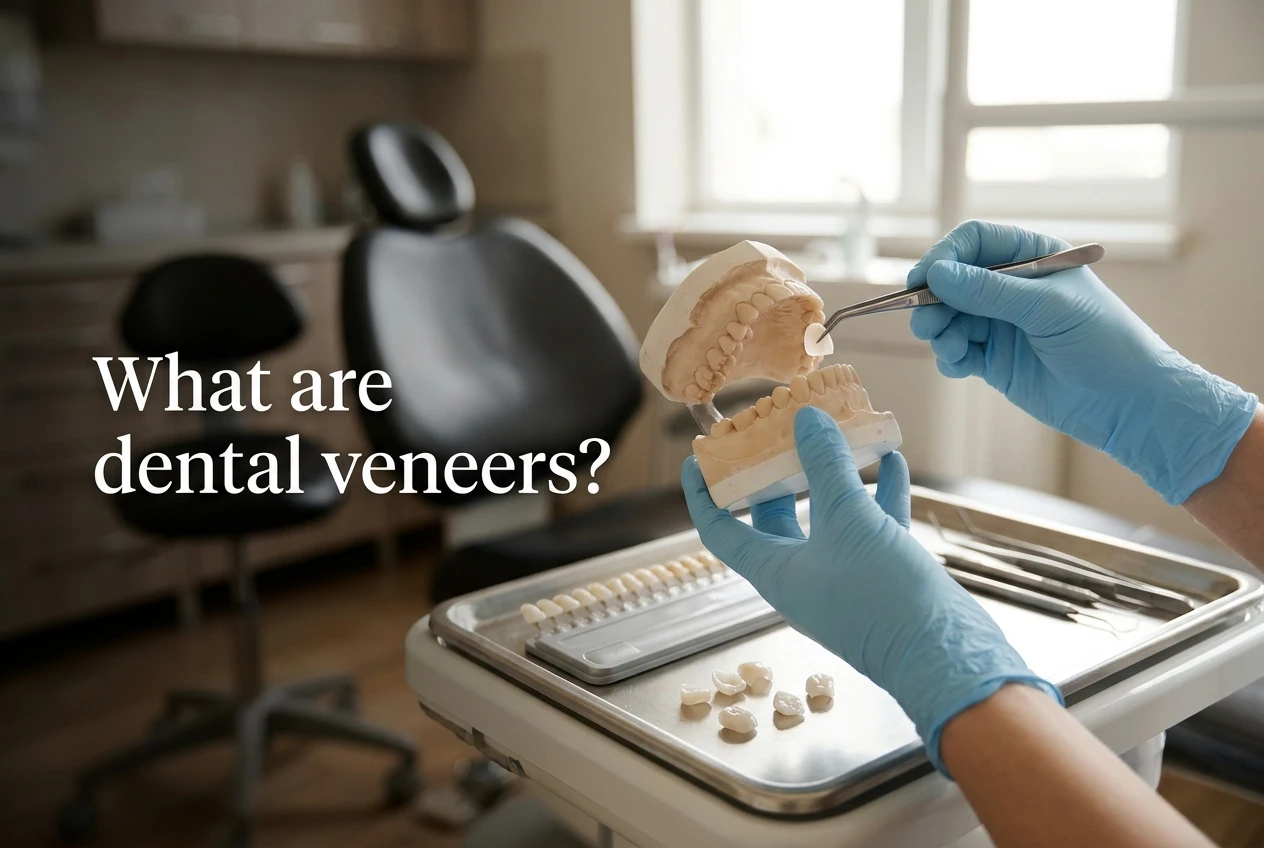
A dental veneer is a thin shell of porcelain or composite bonded to the front of a tooth to change its colour, shape, length or position in the smile. Porcelain veneers are made in a dental laboratory from impressions or scans of your teeth, then fitted and bonded by the dentist.
Porcelain veneers commonly last a decade or more with good care, though no dentist can promise an exact figure. How long yours last depends on the following:
- Whether you grind your teeth, in which case a night guard protects them
- Whether you bite hard objects such as pens, ice or fingernails
- How well you clean around them and how often you have check-ups
- The skill of the dentist and the quality of the laboratory work
Veneers do not decay, but the natural tooth underneath still can, particularly at the edge where the veneer meets the tooth. Brushing, flossing and regular dental visits matter as much after veneers as before.
Do veneers damage natural teeth?
Porcelain veneers permanently alter the tooth, because the dentist usually removes a thin layer of enamel so the veneer sits flush with the neighbouring teeth. Enamel does not grow back, so once the tooth has been prepared it will always need a veneer or similar restoration.
The preparation is normally shallow, and a careful dentist removes as little as the result requires. Some “no-prep” or minimal-prep veneers exist, but they suit only certain teeth and can look bulkier. Ask your dentist how much enamel they plan to remove, and why.
This permanence is why the order of treatment matters. If whitening or bonding could solve your concern, they leave your teeth more intact, and veneers can follow later if you still want a bigger change. Veneers also suit people poorly if they have untreated gum disease, active decay or heavy grinding, since those problems need dealing with first.
How much does cosmetic dentistry cost, and what should a quote include?
Cosmetic dentistry costs vary widely with the treatment, the number of teeth, the materials and the clinic, so the useful comparison is between itemised quotes and not between headline prices. Whitening costs least, bonding sits in the middle, and porcelain veneers cost the most per tooth. Prices for veneers differ between Ireland and Hungary, and a written quote from each clinic is the only reliable way to compare them.
A good quote lists:
- The price per tooth, and how many teeth are included
- The material used (composite resin, porcelain, or another ceramic) and the laboratory if there is one
- Consultation, X-ray and scan fees, and whether they are credited against treatment
- Any preparatory work, such as a scale and polish or treating decay or gum disease first
- The number of visits and the time between them
- A night guard, if grinding is a concern
- Follow-up reviews, and what happens if a veneer or bonded repair chips or comes off
- Travel and accommodation, if treatment is abroad
Quotes that give one total with no breakdown make comparison impossible. Ask for it in writing, and ask what could change the price once treatment begins.
When do teeth need more than cosmetic work.?
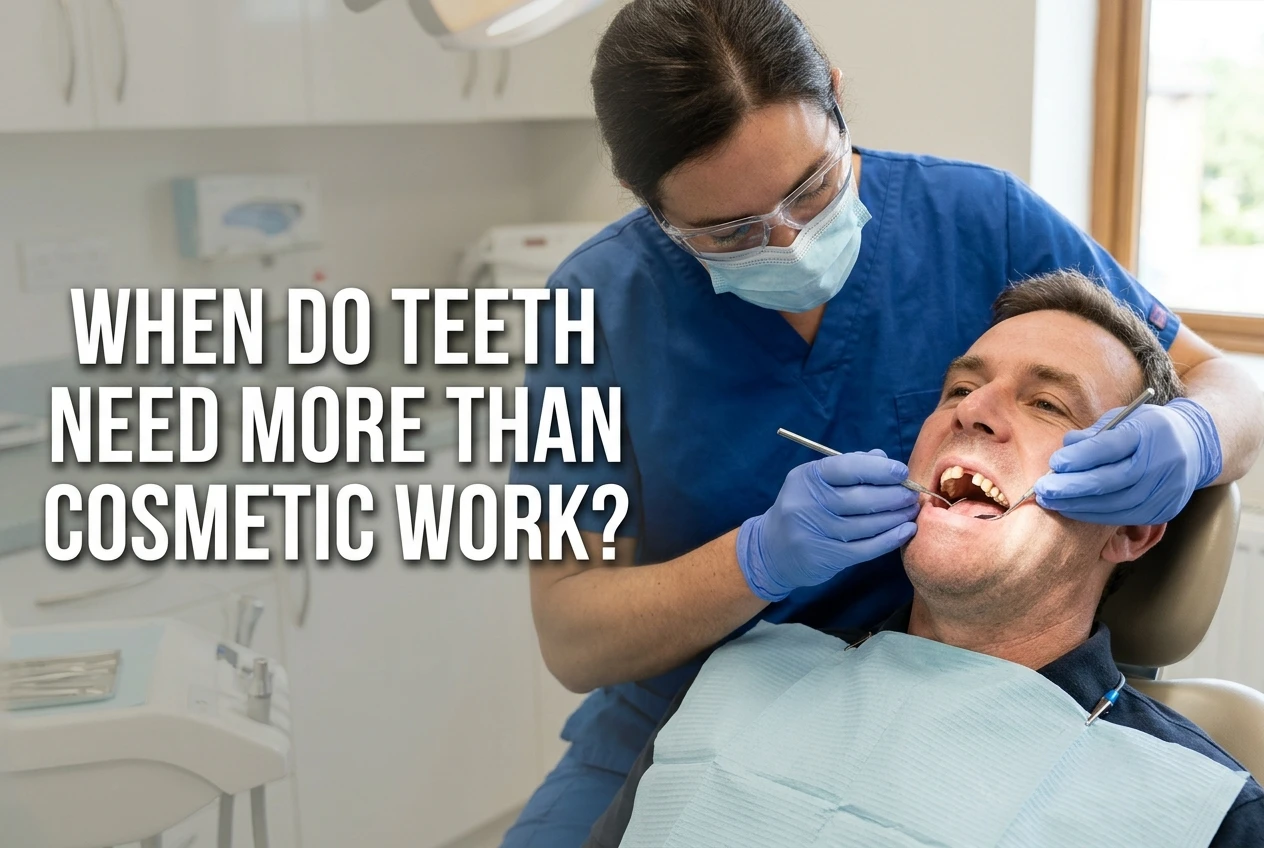
Teeth need more than cosmetic work when they are missing, loose, badly broken or sitting on diseased gums or bone, because whitening, bonding and veneers all depend on a healthy tooth to attach to. Covering a failing tooth with a veneer hides the problem for a while and does not solve it.
Situations that usually point beyond cosmetic treatment:
- A gap where a tooth is missing, not just a space between teeth
- Teeth that have become loose because of gum disease or bone loss
- A tooth too decayed or fractured to hold a veneer or bonding
- Several failing teeth where patching each one would cost more than a planned restoration
In these cases, dental implants are often the answer. An implant is a titanium post placed in the jaw, which fuses with the bone and then holds a crown, bridge or denture. Whether you are a candidate depends on your bone and gum health, which the dentist assesses with X-rays or scans.
Hungarian Dentists Wexford offers more affordable dental implant treatment in Hungary through Perfect Smile Dental Implant Center, with aftercare provided in Ireland. Hungarian implant treatment needs two trips, about four months apart, so the implants have time to fuse before the final teeth are fitted. If your concern is how your teeth look and you are not sure whether you need cosmetic work or something more, a consultation is the sensible place to start.
For simpler needs such as whitening, a scale and polish or a small bonded repair, a registered dentist near you in Wexford is a practical choice, since you can return for adjustments easily. Whoever you choose, ask for the diagnosis first, the options second and an itemised quote third.

If you want to talk through what would improve your smile, book a consultation with Hungarian Dentists Wexford: call Fintan on 087 349 0104 to discuss your options, including treatment at Perfect Smile Dental Implant Center in Hungary with aftercare here in Ireland.