Most adults who are told they might need an implant ask the same thing first: am I a candidate for dental implants, or will I be turned away? For most people in good general health with a missing tooth, the answer is yes, sometimes after extra preparation. What decides it is a short list of checks, and knowing them in advance makes the assessment far less daunting.

Who is usually a good candidate for dental implants
A good candidate has finished growing, has healthy gums, has enough jawbone to hold a titanium post, and has no health condition that stops the area healing. Age by itself is rarely the barrier. Adults in their sixties, seventies and beyond receive implants when their health and bone allow it.
Missing, loose or failing teeth can all lead to an implant. If a tooth is loose, the cause matters, so the page on causes of loose teeth is worth reading first.
The four things a dentist checks: bone, gums, general health and habits
Bone. The implant needs enough height and width of bone around it to stay stable. Bone shrinks over time after a tooth is lost, and gum disease can destroy it too.
Gums. Implants need healthy gums. Active gum disease is normally treated before implant surgery, because infection around an implant can cause it to fail.
General health. The dentist will ask about your medical history and medications, since these affect healing.
Habits. Smoking, heavy drinking and grinding your teeth all put an implant at risk.
Not enough bone? What bone grafts and sinus lifts involve
A bone graft adds bone material to a thin or shrunken area of the jaw so it can support an implant. The material may come from your own body, a donor, or a synthetic or animal source, and your dentist will explain which they propose.
A sinus lift is used for upper back teeth, where the jawbone sits close to the sinus cavity. The surgeon raises the sinus floor slightly and places graft material in the space beneath it. Both procedures give the implant something solid to fix into.
Why a graft can add months and cost, and how to ask for it in writing
The graft has to heal and bond with your own bone before the implant goes in, so treatment takes longer. Sometimes the graft and implant can be done in the same visit, and sometimes the dentist will want to wait. The surgeon decides based on how much bone you have.
Grafts are also frequently left out of a first quote and appear after the scan. To avoid a surprise, ask for a written plan that states:
- whether a graft or sinus lift is expected, possible or ruled out
- the cost of each, listed separately
- how long the healing period is before the implant is placed
- what happens to the price if the scan shows you need one
If you are comparing prices, the full mouth implants cost guide shows what a quote should cover.
Health conditions and habits that complicate implants, from diabetes to smoking
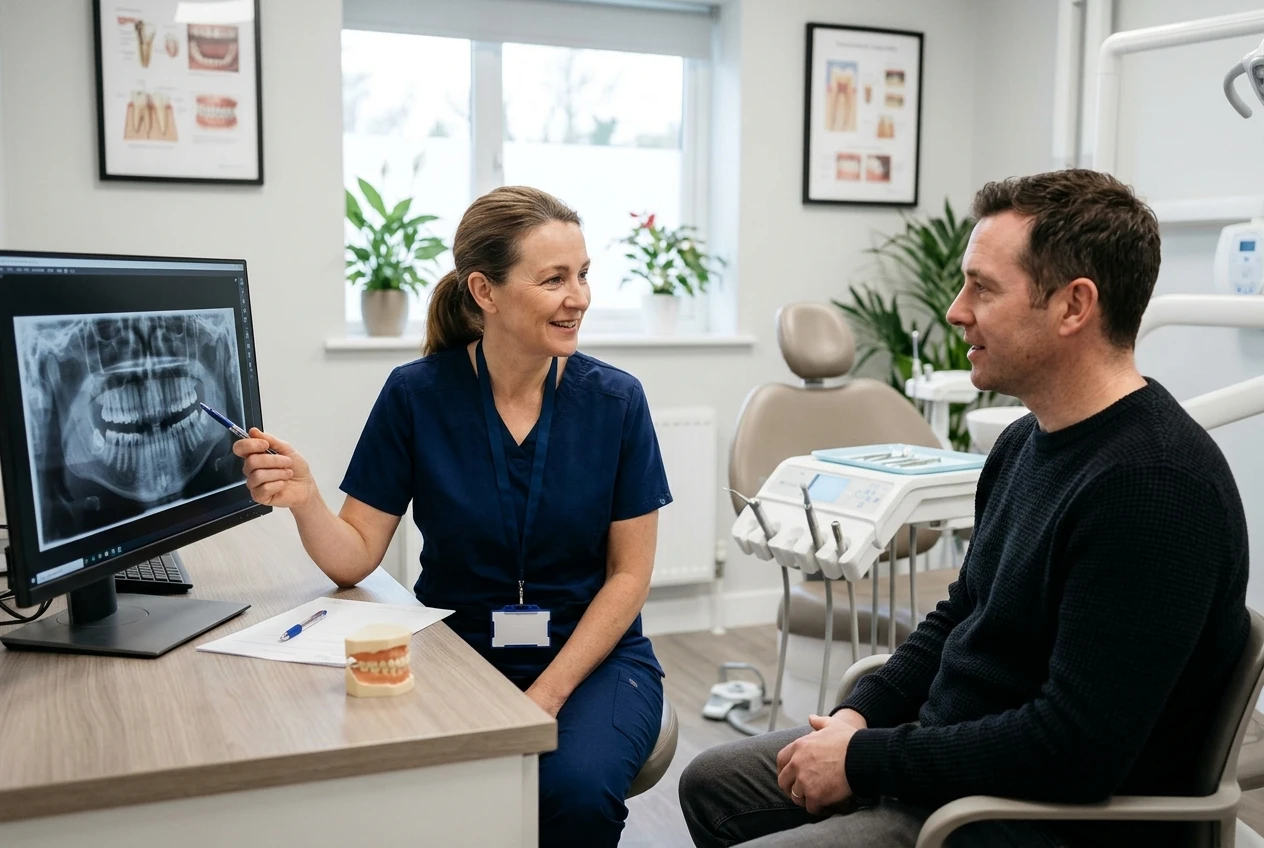
Poorly controlled diabetes slows healing and raises the risk of infection, so dentists usually want blood sugar well managed first. Gum disease, osteoporosis treatments, radiotherapy to the head or neck, and conditions that weaken the immune system can also affect planning. Some of these do not rule out implants but mean your dentist may want to speak to your doctor.
Smoking reduces blood flow to the gums and is one of the clearest risks to implant success. Many dentists ask patients to stop before surgery and during healing. Tell the dentist honestly what you smoke and how much, because the plan depends on it.
If you are told you are not a candidate: bridges, dentures and second opinions
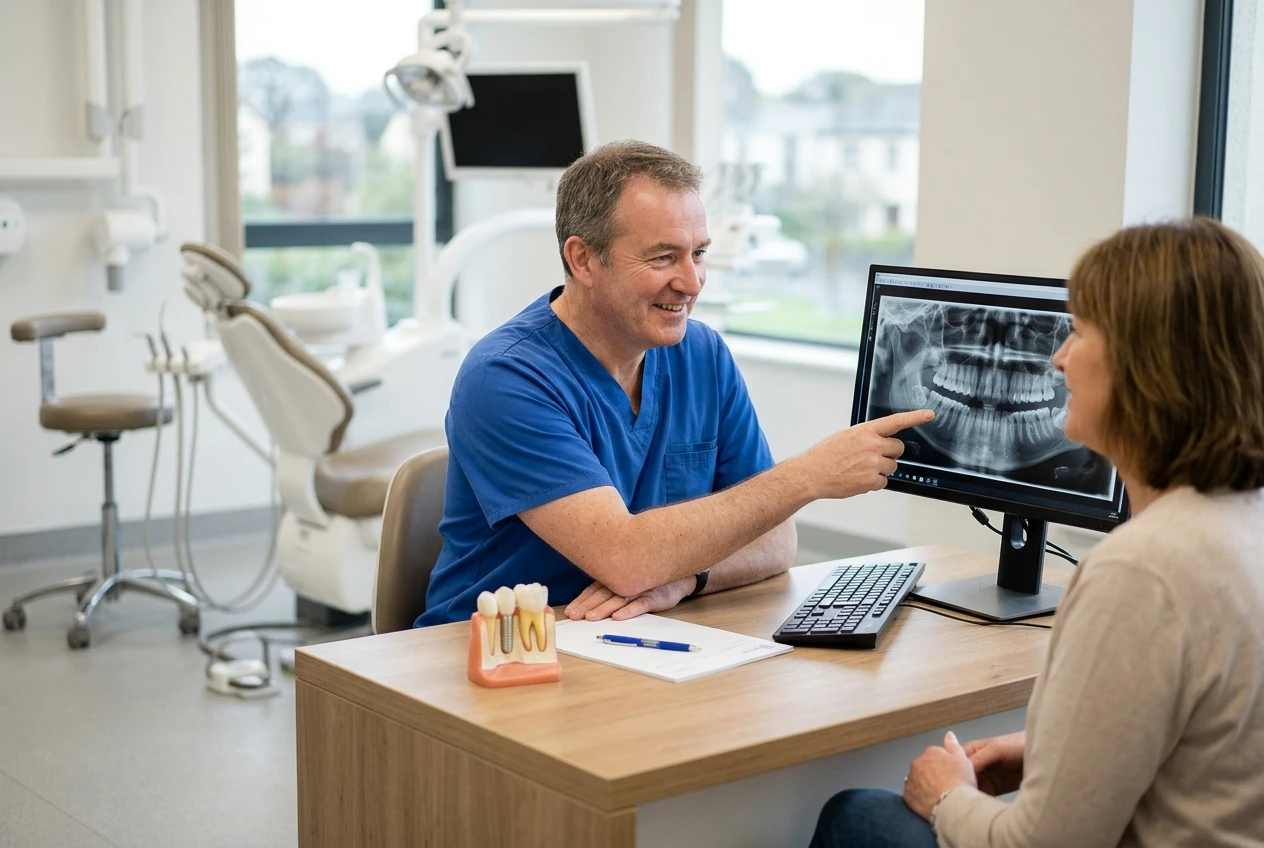
A no is not always final. It may mean “not yet,” for example after gum treatment, quitting smoking or a graft. If it is a firm no, there are other ways to replace teeth:
- Bridge: replaces a tooth by joining crowns to the teeth either side. Our page on what a dental bridge is and what it costs explains it.
- Dentures: removable replacements for some or all teeth, which need no surgery.
- Implant-retained dentures: fewer implants used to hold a denture firmly, sometimes possible when full implants are not.
Ask the dentist exactly why you were declined and what would change the answer. If the reason is unclear, get a second opinion. Different dentists plan differently, and a second set of eyes on the same X-ray costs little compared with the treatment itself.

What to expect at the assessment, from X-ray to treatment plan
The visit usually starts with a conversation about your history and what you want. The dentist examines your teeth and gums, then takes an X-ray, sometimes a 3D scan, to see the bone. From that you should get a treatment plan covering what is possible, in what order, and at what cost. The implant consultation process page walks through this in more detail.
Questions to ask before you agree to any quote
- Based on my scan, am I a candidate, and what is that based on?
- Will I need a bone graft or sinus lift, and is it in this price?
- How long will the whole treatment take, including healing?
- What happens if an implant fails, and is that covered?
- What are my alternatives if implants are not suitable?
Book a free consultation and X-ray to find out where you stand before you commit to any treatment plan. Call Fintan in Hungarian Dentists Wexford on 0873490104